NICEIC certified electricians · BS 7671 · Remedial work · London
EICR Inspections and Remedial Work for London Rentals
The electrical inspection itself: every circuit tested by a NICEIC certified electrician, any C1, C2 or FI observation explained in plain English, the remedial work quoted and done, and the written confirmation you need for your tenants and the council.
- Every circuit tested and recorded
- Codes explained in plain English
- Remedial work and confirmation
What happens during an EICR inspection?
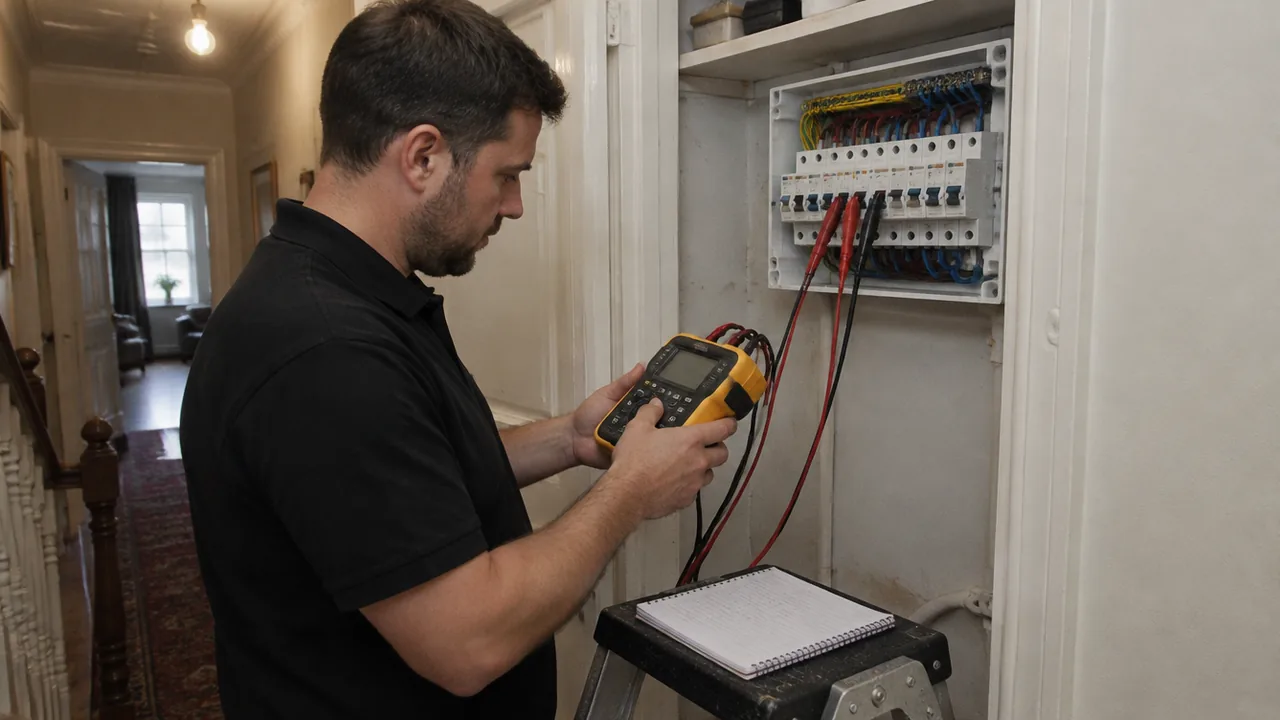
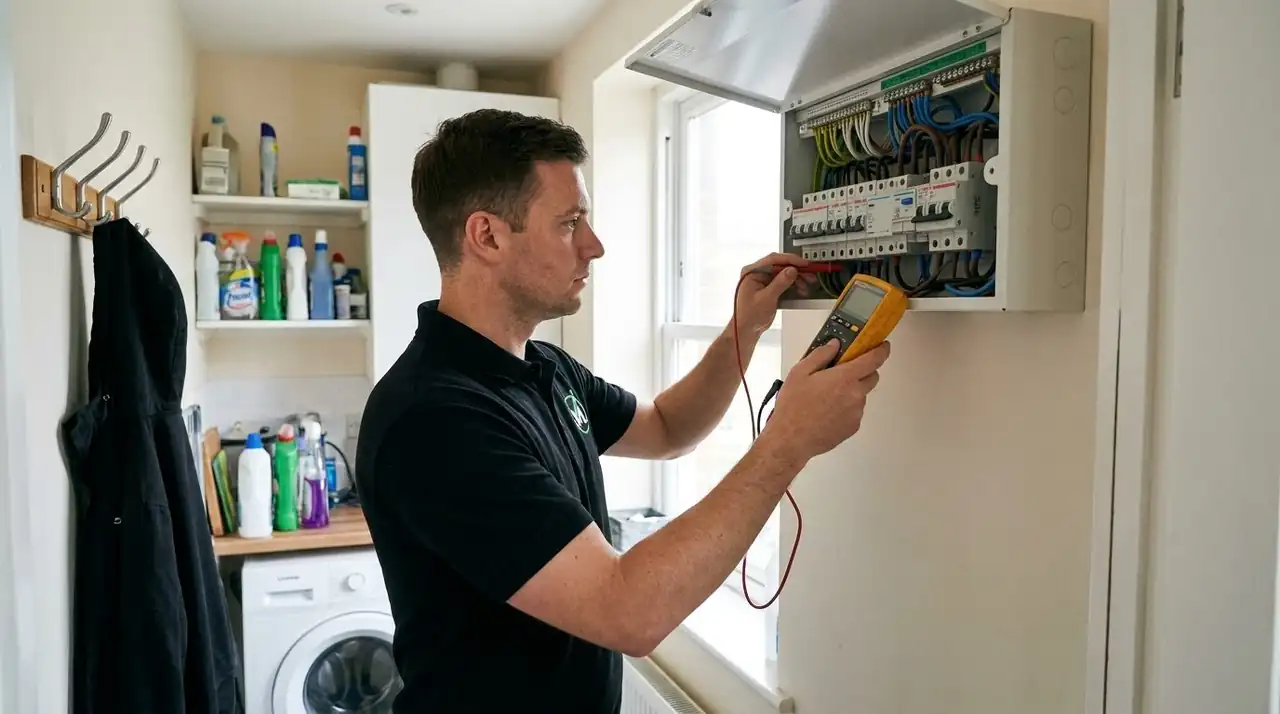
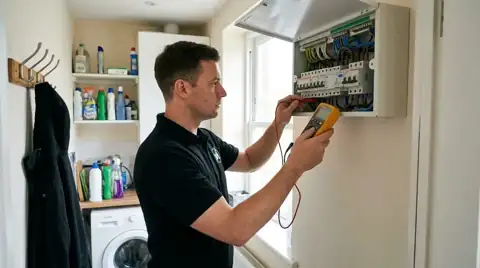
The electrician inspects the fixed installation, then switches off and tests it circuit by circuit: earthing, insulation, polarity, RCD trip times and the condition of the consumer unit, sockets and fittings. Each problem is given a code, and the report is satisfactory only when there is no C1, C2 or FI left on it.
Tested, not just looked at
Readings recorded for every circuit
Faults coded
C1, C2, FI and C3 explained
Remedial work done
With the confirmation you must send
Landlord duties in brief
- An inspection and test at least every five years, or sooner if the report says so
- A copy of the report to tenants within 28 days, and to new tenants before they move in
- Remedial or investigative work within 28 days, or less if the report says so
- Written confirmation of that work to the tenant and the council within 28 days of finishing it
Source: Electrical Safety Standards in the Private Rented Sector (England) Regulations 2020, as amended. Penalties and who the rules apply to are explained in our guide is an EICR a legal requirement for landlords?
On the day
What the Electrician Inspects and Tests
An EICR is measured against BS 7671, the IET Wiring Regulations. Half of it is inspection; the other half is testing with instruments, with every result written down.
Consumer unit
- Type, condition and labelling of the board
- Circuit breakers and RCDs suited to each circuit
- Signs of heat, scorching or loose connections
- Accessible and fixed securely
Earthing and bonding
- Main earthing conductor and earth connection
- Main bonding to incoming gas and water pipes
- Supplementary bonding where a bathroom needs it
- Earth fault loop impedance measured
Circuit testing
- Continuity of protective conductors
- Insulation resistance on each circuit
- Polarity, so switches break the live conductor
- Results recorded circuit by circuit
RCD protection
- Each RCD tripped with a test instrument
- Trip time measured, not just the test button
- Circuits that need RCD protection identified
- Results written against each device
Sockets, switches and fittings
- Damaged, loose or overheated accessories
- Sockets in reach of a sink or shower
- Light fittings and ceiling roses
- Fixed appliances wired to fused spurs
Bathrooms and wiring routes
- Electric showers and their protection
- Equipment in the right zone around the bath or shower
- Visible cables, damaged sheathing and old wiring
- Extensions and alterations since the last report

The Four Codes on Your Report, and What Happens Next
Each observation on an EICR gets one of four codes. Three of them make the report unsatisfactory until the work is done; the fourth is advice.
Danger present
Someone could be hurt now, for example exposed live parts.
Next: The electrician makes it safe before leaving, usually by isolating the circuit, and the report is unsatisfactory until the permanent repair is done.
Potentially dangerous
Not dangerous at this moment, but it would become dangerous if a fault occurred, such as a missing earth or no RCD where one is needed.
Next: The report is unsatisfactory. Remedial work is quoted and booked inside the legal timeframe.
Further investigation
Something could not be fully checked on the day, for example a circuit that could not be traced.
Next: Treated like a fault until it is investigated. We book the investigation and any work it reveals.
Improvement recommended
Not to the current standard but not unsafe, such as an older consumer unit that still works correctly.
Next: Does not make the report unsatisfactory. Listed as advice so you can plan it with other work.
From an Unsatisfactory Report to a Compliant One
Most of the risk for a landlord sits after the inspection, in the 28 days that follow. This is how we close it.
- STEP 1
Report explained
Each C1, C2 and FI described in plain English, with photos of what was found.
- STEP 2
Fixed quote
A price for the remedial work, agreed before anything is done.
- STEP 3
Work inside the deadline
Booked within 28 days, or sooner where the report sets a shorter period.
- STEP 4
Written confirmation
Confirmation from the electrician that the work is done and the installation meets the standard.
- STEP 5
Copies sent
Ready to send to your tenant and the local council within 28 days of finishing.
Findings That Often Come Up in Older Rented Flats
The code each one gets depends on the installation and the electrician's judgement on the day, so treat these as examples rather than a rule.
No RCD on socket circuits
Older boards often protect sockets with fuses or breakers only. Where RCD protection is needed and missing, it usually needs fixing before the report can pass.
Missing main bonding
Bonding to the incoming gas or water pipe removed during a kitchen or bathroom refit and never put back.
Damaged sockets and switches
Cracked faceplates, loose fixings and scorch marks from overloaded adaptors, often in kitchens and bedrooms.
Bathroom changes
Electric showers, shaver points or lights added without the right protection, or fittings in the wrong zone.
Unrecorded alterations
Extra circuits or extensions added by a previous owner with no certificate, which may need investigating.
An older consumer unit
Often still safe and coded as advice, but worth planning to replace alongside other electrical work.
Flats, HMOs, Blocks and Communal Areas
In a block, the installation inside a let flat and the landlord supply serving the building are two different jobs with two different reports. Getting that split right avoids gaps.
Rented flat or house
The whole fixed installation inside the property, from the consumer unit to every circuit
One report, the next due date tracked
HMO
Each letting room and the shared kitchen, hallways and bathrooms, often with closer licence conditions
Access agreed with every occupier, one report for the house
Flats in a block
The installation inside each let flat; the landlord supply and communal lighting are the freeholder's and inspected separately
One report per flat, a summary for the managing agent
Communal areas
Landlord supply, stair and corridor lighting, plant room and car park circuits
A separate report for the building, on its own renewal date
| Where | What is inspected | How reports are kept |
|---|---|---|
| Rented flat or house | The whole fixed installation inside the property, from the consumer unit to every circuit | One report, the next due date tracked |
| HMO | Each letting room and the shared kitchen, hallways and bathrooms, often with closer licence conditions | Access agreed with every occupier, one report for the house |
| Flats in a block | The installation inside each let flat; the landlord supply and communal lighting are the freeholder's and inspected separately | One report per flat, a summary for the managing agent |
| Communal areas | Landlord supply, stair and corridor lighting, plant room and car park circuits | A separate report for the building, on its own renewal date |
What Your Tenant Should Expect on the Day
Testing means the power goes off, circuit by circuit. A little preparation keeps the visit short and the tenant on side.
- Power is switched off one circuit at a time, so it is not off for the whole visit
- Clear access to the consumer unit and to sockets behind furniture where possible
- Fridges, freezers, routers and alarms are checked before their circuit goes off
- Every room needs to be accessible, including loft hatches and cupboards with electrics
- Bigger properties and HMOs take longer; we give the tenant a time window in advance
What you receive
- The EICR with the schedule of test results for every circuit
- Each observation and its code, explained in plain English
- Photos of every C1, C2 and FI item, in our report
- A fixed quote for remedial work, before anything is done
- The next inspection date, already on our renewal calendar
A photographed PDF report after every EICR
No handwritten job sheets and no chasing. Our engineers complete each job electronically on site in Maintivo, our job management system, so the report is built as the work happens: photos, readings, work done and recommendations.
You receive it as a digital PDF by email the same day, with certificates attached where they apply, ready to forward to a landlord, a freeholder, the directors or an insurer.
- Before and after photosEvery unit and fault photographed on site
- Readings and checksTemperatures, pressures and test results recorded
- Work done and next stepsWhat was fixed, what needs quoting, when we return
- Sent the same dayDigital PDF report by email, ready to forward
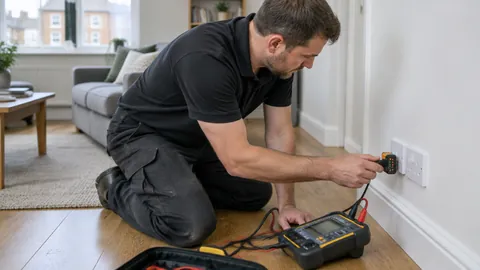
Example layout. Completed on site in Maintivo.
Who Carries Out the Inspection
EICRs and remedial work are carried out by NICEIC certified electricians, testing to BS 7671.
The same electricians can carry out the remedial work, so the confirmation comes from the person who knows the installation.
Mainteniq is SafeContractor approved (certificate NZ2372) and keeps every report, quote and confirmation together for each property.
Related Guides and Services
The law, deadlines and penalties: our EICR guide for landlordsAll landlord certificates on one calendarPAT testing for portable appliancesCommercial EICRs and electrical workCP12 gas safety inspectionsInspecting a whole block? See block maintenance contracts.
What customers say on Google
“I've had the pleasure of working with Petru and his team on a number of maintenance jobs, and they've always been fantastic. They're professional, reliable, and complete every job to a really high standard. Petru is incredibly knowledgeable and it's clear he takes pride in his work.”
Deborah L.
Google review
“Excellent service. Price assessment: reasonable price.”
Attila B.
Google review
“The team is knowledgeable, efficient, and attentive to detail. A great choice for anyone looking for reliable maintenance services. Highly recommended!”
Ben
Google review
Book an EICR in London
Tell us the property type, roughly how old it is and when the last report was done. We arrange access, test the installation and see any remedial work through to the written confirmation.