Planned vs Reactive Maintenance: The Real Cost
‘Fix it when it breaks’ feels like the cheap option because you only pay when something goes wrong. Across a year and a portfolio, it is almost always the expensive one. Here is why.
Ask most landlords how they handle maintenance and the honest answer is: reactively. Something breaks, a tenant calls, you find someone to fix it, you pay the bill. It feels prudent, why pay for servicing when nothing is wrong?
But the reactive model hides its true cost in places that never appear on a single invoice. For landlords and managing agents letting across London, understanding where that money actually goes is the difference between a predictable operation and a leaky one.
The reactive model's hidden bill
The visible cost of reactive maintenance is the repair itself. The real cost is everything around it:
- Emergency premiums. A boiler that fails on a Friday night is an out-of-hours callout at a premium rate, often with expedited parts. The same fault caught during a routine service is a fraction of the price.
- Void and un-lettable time. A property without heating or hot water cannot be let, and a sitting tenant without them has grounds for complaint, and, increasingly, for withholding cooperation. Days of void are days of lost rent that dwarf the repair bill.
- Collateral damage. A small leak ignored becomes a ceiling repair. A blocked condensate becomes a flooded flat. Reactive maintenance, by definition, only acts after the damage has begun.
- Shortened asset life. Boilers, pumps, air conditioning and HIUs that are never serviced fail years earlier than those that are. Premature replacement of major plant is the most expensive line item of all.
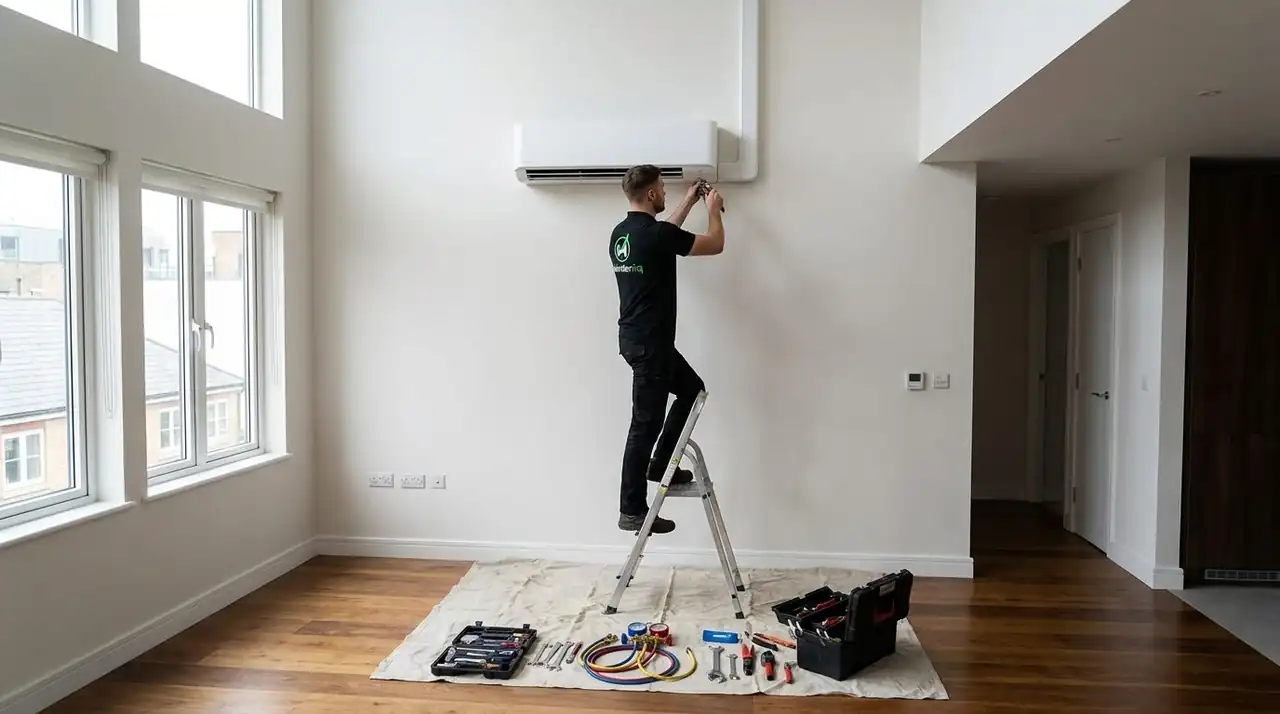
What planned maintenance changes
Planned preventative maintenance, PPM, inverts the model. Instead of waiting for failure, key systems are inspected and serviced on a schedule, and statutory compliance is renewed before it lapses.
The point is not that each visit is cheap; it is that the visits prevent the expensive tail. You trade a small, known, budgetable cost for the removal of large, unknown, badly-timed ones.
There is a cash-flow benefit too. Reactive spending arrives in unpredictable spikes, nothing for months, then a £2,000 weekend. A contract spreads cost evenly across the year, which makes a rental operation far easier to budget and to report on to owners or investors.
The compliance angle. Reactive thinking is especially dangerous with statutory obligations.
A Gas Safety Certificate that lapses or an EICR that is overdue is not a “we'll get to it” item, it is a live legal exposure carrying penalties of up to £30,000 for electrical breaches and criminal liability for gas. Planned maintenance keeps these on a calendar so they simply never lapse.
The retention dividend
There is one more cost the reactive model ignores entirely: tenant turnover. Reliable heating, hot water, and fast repairs are consistently among the strongest drivers of tenant satisfaction. Tenants who are comfortable and well looked-after renew; tenants left waiting for a fix look elsewhere.
Because re-letting, voids, agent fees, referencing, refurbishment between tenancies, is the single largest avoidable expense for most landlords, anything that lengthens tenancies pays for itself many times over. Well-maintained properties keep tenants longer.
What a good contract looks like
A planned maintenance contract worth having does three things at once:
- Handles your statutory compliance, CP12, EICR, PAT testing, Legionella, on a single renewal calendar.
- Services your key systems, heating and boilers, air conditioning, ventilation, and any communal plant such as HIUs or a BMS.
- Gives you a defined response time for the repairs that do still happen, from one accountable provider rather than a scramble of separate trades.
The consolidation is the quiet win: one point of contact, one audit trail, and one predictable cost instead of a drawer full of certificates on different clocks and a phone full of contractors.
The bottom line
Reactive maintenance is not cheaper, it is simply cheaper until it isn't, and the moment it isn't tends to be the worst possible one. For anyone letting more than a single property, planned maintenance is the model that lowers total cost, removes legal exposure, and keeps tenants in place.
See how Mainteniq structures maintenance contracts for London landlords, agents and blocks, or browse everything we cover.
Related services & guides
Talk to a London maintenance specialist
Whether it's one property or a portfolio, we'll put your compliance and servicing on a single planned maintenance contract. Get a no-obligation quote.