Heat Network Regulations 2026: What Managing Agents Must Do
Ofgem now regulates heat networks in Great Britain, and that includes most blocks of flats with a shared plant room. Here is what has changed, who has to act, and the maintenance records a well-run block should already hold.
If you manage a block where heating and hot water come from a shared plant room rather than a boiler in each flat, the building is almost certainly on a heat network. From 2026 that brings it under a regulator for the first time.
This guide is written for managing agents, directors of residents' management companies (RMCs) and right to manage (RTM) companies, and freeholders. It sets out what has been confirmed, who in a block is likely to be responsible, and what you can do now. We are a maintenance contractor, not legal advisers, so treat it as a starting point and check Ofgem's guidance for your own building.
What changed on 27 January 2026?
On 27 January 2026 Ofgem became the regulator for heat networks in Great Britain, under the Heat Networks (Market Framework) (Great Britain) Regulations 2025. From that date, heat network operators and suppliers have had to comply with Ofgem's authorisation conditions, a set of rules designed to protect heat network customers.
Existing networks were not switched off or made to apply from scratch. They received deemed authorisation, which lets them keep supplying heating, cooling and hot water while the new regime beds in.
Does your block count as a heat network?
Ofgem's guidance includes communal heat networks: systems supplying heating, cooling or hot water to a single building that is divided into separate premises. That describes most blocks of flats with a central plant room and a heat interface unit (HIU) in each flat. Larger district networks serving several buildings are also covered.
Ofgem lists some exemptions, for example a single house in multiple occupation on a shared heating system, and single buildings with shared facilities that are not divided into separate premises, such as care homes. If you are unsure, check Ofgem's "who should register" guidance.
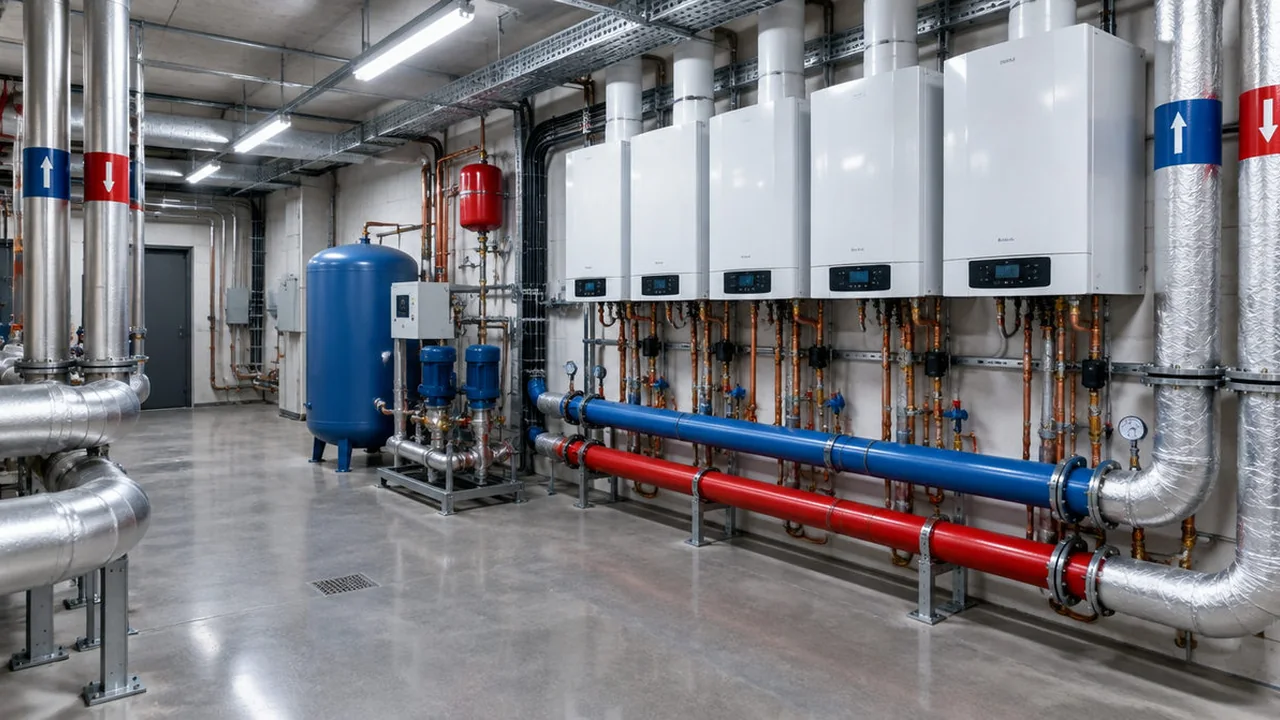
The dates managing agents need to know
- 27 January 2026: Ofgem regulation began and existing networks received deemed authorisation.
- By 26 January 2027: operators and suppliers of relevant heat networks must register with Ofgem through its heat networks digital service.
- Energy Ombudsman: suppliers must also register with the Energy Ombudsman's heat network scheme.
- From 2027: Ofgem has said it plans to phase in Guaranteed Standards of Performance for heat networks from 2027, with further rules still to come. Government has said the Heat Network Technical Assurance Scheme (HNTAS) is planned to launch in 2027.
Residents also have somewhere to go. Citizens Advice, Consumer Scotland and the Energy Ombudsman provide advice and redress for heat network customers, so complaints about heating in a block can now escalate beyond the managing agent.
Who is the operator and who is the supplier in a block?
Ofgem describes the operator as the party that typically owns the network assets and has sufficient control over them, and the supplier as the party responsible for the contractual and customer-facing side of supplying heat. One organisation can hold both roles.
In a residential block, those roles commonly sit with one of:
- the freeholder or landlord who owns the building and its plant;
- a residents' management company or RTM company that runs the building;
- an energy services company (ESCo) that owns or runs the network under contract.
The managing agent is usually acting on behalf of one of these, rather than being the operator or supplier itself. In practice, though, it is the agent who will be asked to gather the information, chase the registration and keep the records. The safest course is to confirm the position for each block in writing with the client and, where it is not clear, take advice.
What records should a well-maintained block already have?
Registration is about the organisation. Running the network well is about the plant. Whatever Ofgem asks for now or later, a block that is properly maintained should be able to put its hands on the following without a scramble:
- An asset register: every item in the plant room, every HIU and CIU, with make, model, location and age.
- HIU service history: the date of the last service for each flat, what was found and what was done.
- Commissioning data: the design flow and return temperatures, pressures and settings the system was handed over with.
- Flow and return temperatures: readings from the plant room and from each HIU, recorded over time.
- Metering checks: heat meters reading and communicating, with faults logged and fixed.
- A fault and complaint log: each breakdown or resident complaint, the cause and the fix.
- Visit reports: photographed reports from every planned and reactive visit.

A checklist for managing agents
- List every block in your portfolio with a shared plant room or a heat network connection.
- For each block, confirm in writing who the operator and supplier are likely to be.
- Make sure that party knows about registration with Ofgem by 26 January 2027, and with the Energy Ombudsman where it is a supplier.
- Pull together the asset register and HIU service history. Note any flats with no record.
- Check that the plant room has a current service and that flow and return temperatures are being recorded.
- Set up a fault and complaint log if there is not one already.
- Put the network on a planned maintenance programme so the records keep building year on year.
Do not wait for an Ofgem request to discover that half the HIUs in a block have never been serviced. Gaps in the record are much cheaper to close on a planned programme than after a winter of complaints.
How Mainteniq helps
We maintain the building side of communal heating in London and across a 120-mile radius: the plant room, pumps, plate heat exchangers, HIUs, CIUs, metering and controls. Every job is completed on site in Maintivo, and a photographed PDF report is emailed the same day. At the end of a programme the directors receive a block summary showing units done, units with no access, faults by pattern and repairs in priority order.
See our heat network maintenance service, our HIU maintenance page, how block maintenance contracts work, and our approach to maintenance for managing agents. Quotes are tailored after a survey; contact us to discuss your blocks with Petru.
Sources
- Ofgem: Heat networks
- Ofgem: Who should register
- Ofgem: Heat networks regulation timeline
- Ofgem: Response to consultation on heat networks fair pricing protections (PDF)
- GOV.UK: Heat networks guidance
- GOV.UK: Heat Network Technical Assurance Scheme (HNTAS)
- legislation.gov.uk: The Heat Networks (Market Framework) (Great Britain) Regulations 2025
Related services & guides
Talk to a London maintenance specialist
Whether it's one property or a portfolio, we'll put your compliance and servicing on a single planned maintenance contract. Get a no-obligation quote.