Heat Network Maintenance in London for Communal Heating Blocks
Communal heating maintenance from the plant room to the last flat: pumps, plate heat exchangers, HIUs, CIUs, metering and controls on one planned programme, with a photographed report after every visit.
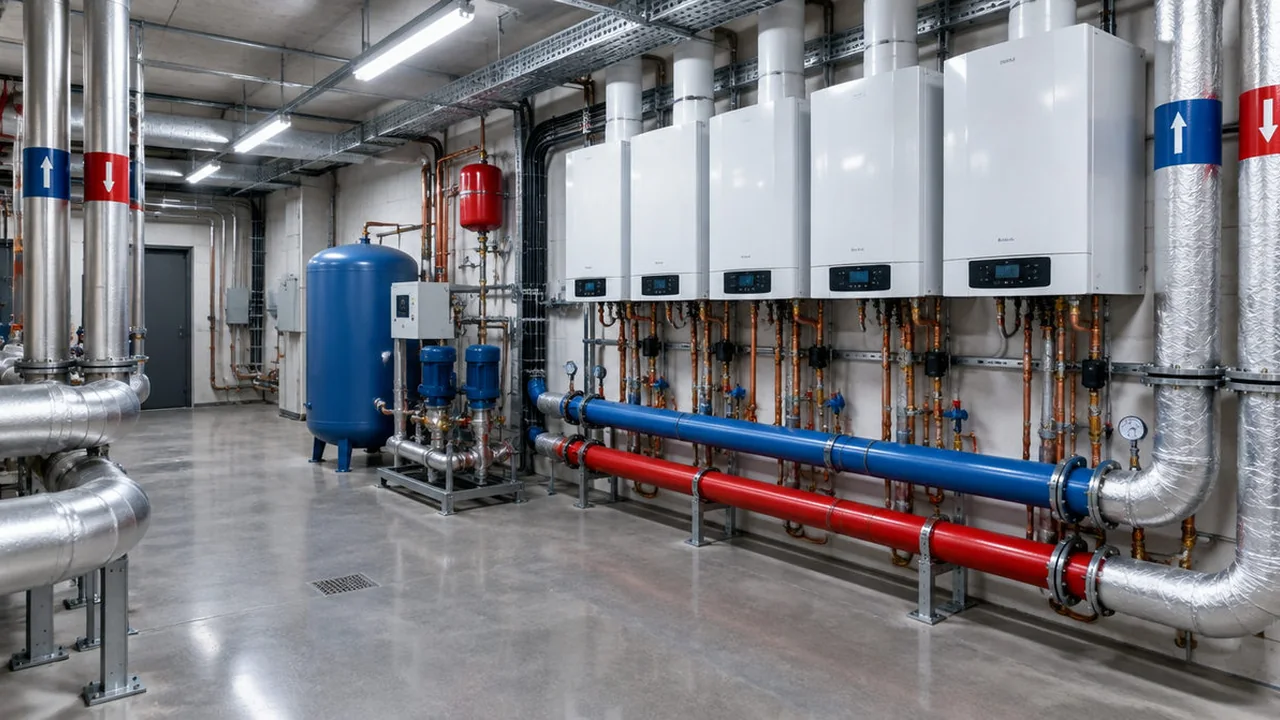
Heat network maintenance in London at a glance
Mainteniq maintains the building side of communal heating and heat networks in London blocks: the plant room, circulating pumps, plate heat exchangers, every HIU and CIU, heat metering and controls, and the secondary pipework that connects them. Each visit is planned, recorded and reported, so the block has evidence its heating is looked after.
We are a maintenance contractor, not a heat supplier.
- We do not operate heat networks, sell heat or register anyone with Ofgem; that stays with the operator and supplier for the block, usually the freeholder, a residents' management company, an RTM company or an energy services company.
- What we provide is the planned maintenance and the records that sit behind it.
- Engineers hold SAV Advanced HIU Service Engineer certification, the company holds REFCOM F-Gas certification, and every job is completed on site in Maintivo with a photographed PDF report emailed the same day.
- Contracts run alongside our block maintenance contracts and wider planned maintenance contracts.
What Does Heat Network Maintenance Cover?
Everything on the building side of the network, from where heat enters the plant room to the tap in each flat.
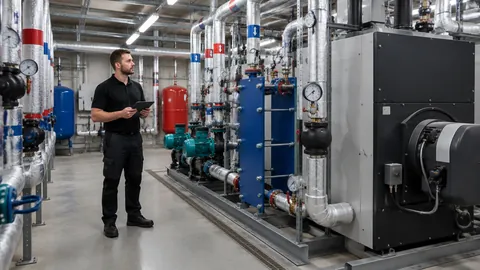
Plant room
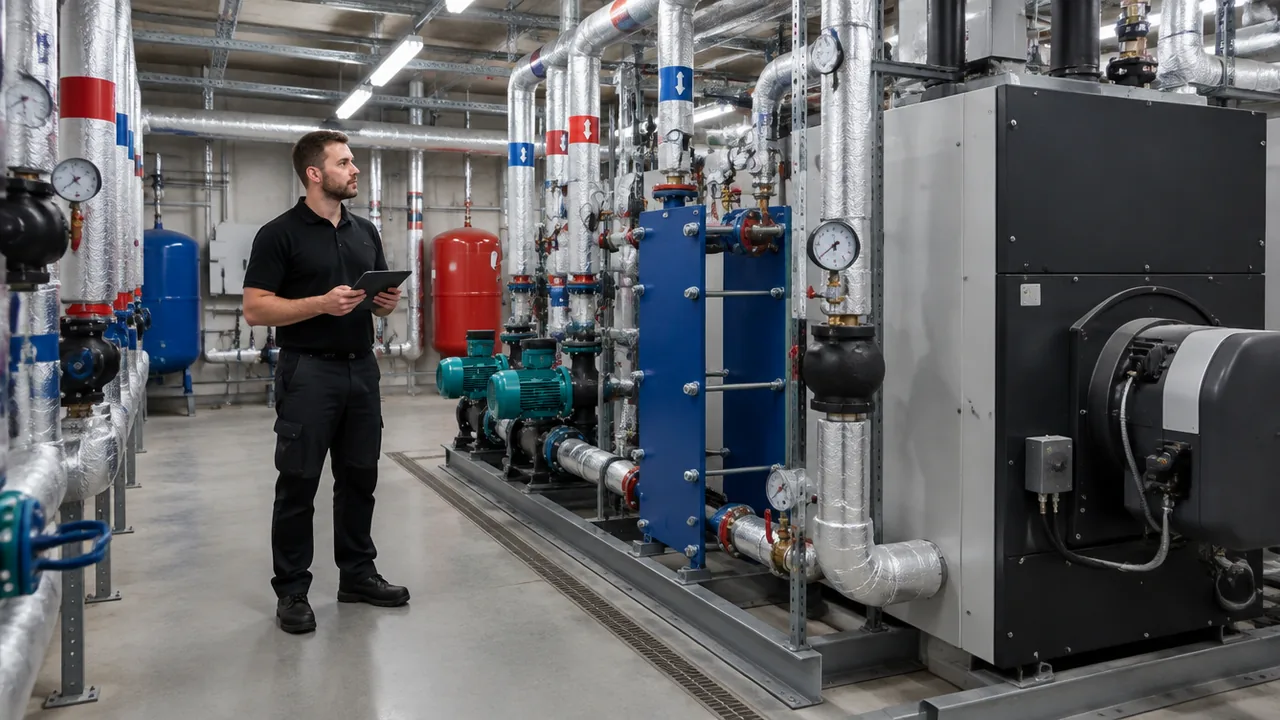
Communal boilers or heat pumps, buffer vessels, pressurisation units, expansion vessels and safety devices.
Pumps
Primary and secondary circulating pumps: duty and standby changeover, pressures, noise, seals and bearings.
Plate heat exchangers
Primary to secondary heat exchange: temperature approach, fouling, leaks and isolation valves.
HIUs and CIUs
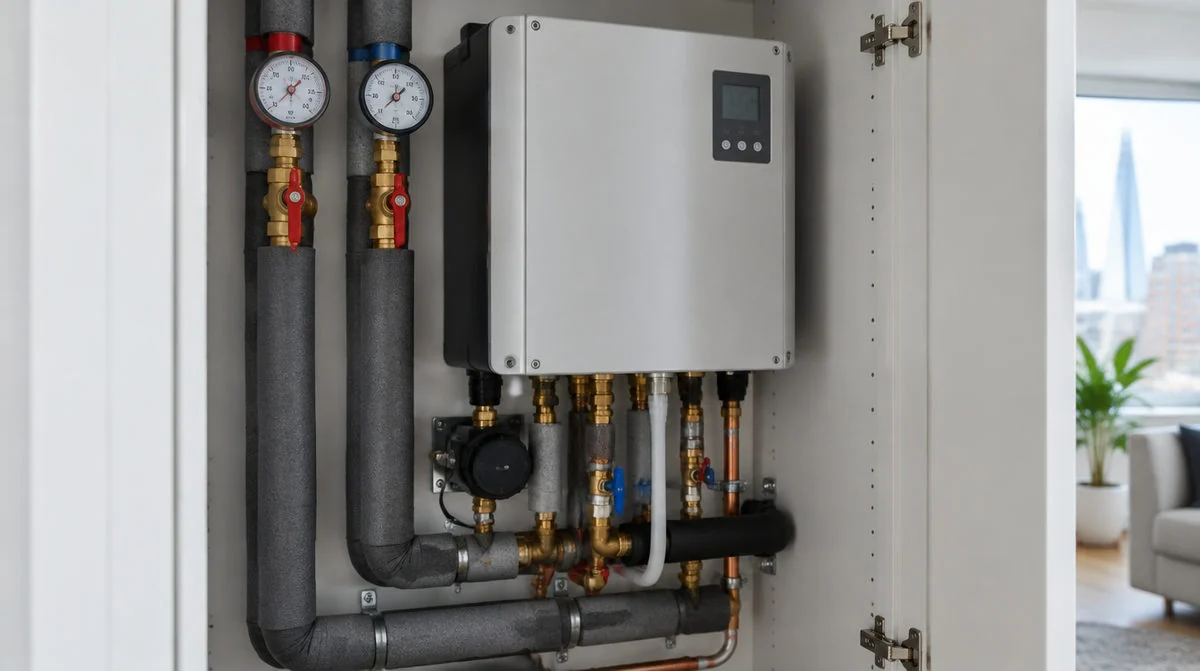
Every heat interface unit and cooling interface unit in the flats, serviced and recorded unit by unit.
Metering and controls
Heat meters, controllers, sensors and the BMS: readings, communication, setpoints and time schedules.
Secondary pipework and water
Risers, branch valves, balancing valves, strainers and dirt separators, with water condition checks where in scope.
Detail for the units in the flats is on our HIU maintenance and CIU maintenance pages, and controls are covered under building management systems.
What Do We Check, and How Often?
A typical programme for a block on communal heating. Final frequencies are set after the survey, following manufacturer guidance and the condition of the system.
| Asset | What we check | How often |
|---|---|---|
| Heat interface units (HIUs) | Strainer clean, plate heat exchanger condition, control and differential pressure valves, flow and return temperatures, hot water delivery | Annually; six-monthly for high-use or older units |
| Cooling interface units (CIUs) | Strainers, valves, actuators, condensate, controls and leak checks | Annually, before the cooling season |
| Plant room heat source | Operation, safety devices, combustion or refrigerant checks as applicable (gas work by Gas Safe registered engineers) | Annually, with checks at each planned visit |
| Circulating pumps | Duty and standby changeover, pressures, noise, vibration and seals | At each planned visit |
| Plate heat exchangers | Temperature approach across primary and secondary, signs of fouling, leaks | At each planned visit; cleaning as condition requires |
| Pressurisation and expansion | System pressure, expansion vessel charge, make-up water and alarms | At each planned visit |
| Strainers and dirt separators | Cleaned and inspected, debris recorded as an early sign of water quality problems | At each planned visit |
| Heat meters and controls | Readings, communication, sensor positions, setpoints, BMS alarms and time schedules | Annually, with alarm review at each visit |
| Secondary pipework and balancing | Leaks, insulation, branch valves and balancing against design flow and return temperatures | Annually, or after complaints cluster in one riser |
Why Does Communal Heating Fail?
Most communal heating complaints trace back to a handful of causes, and most of them build up slowly between visits.
High return temperatures
Water comes back to the plant room too hot because HIUs, bypasses or controls are letting heat through unused. The network loses efficiency and heat losses rise.
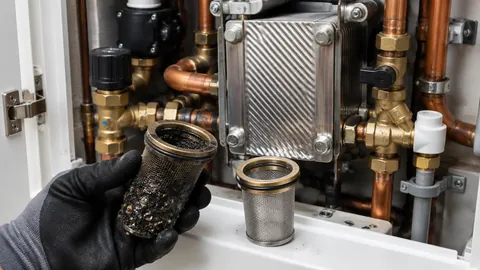
Blocked HIU strainers
Debris in the network water collects in each unit's strainer. Flow drops, hot water turns lukewarm and the flat calls the agent.
Poor balancing
Flats near the plant room take more than their share and top floors or far risers run short, often worst in the first cold week.
High bills and disputes
Inefficient plant and losses in the pipework are paid for by residents through heat charges or the service charge, and questions follow.
Controls that drift
Setpoints changed after a breakdown and never reset, time schedules that no longer match the building, sensors reading the wrong thing.
Pump and pressure faults
A failed duty pump with no working standby, or a pressurisation unit losing charge, can leave the whole block without heat.
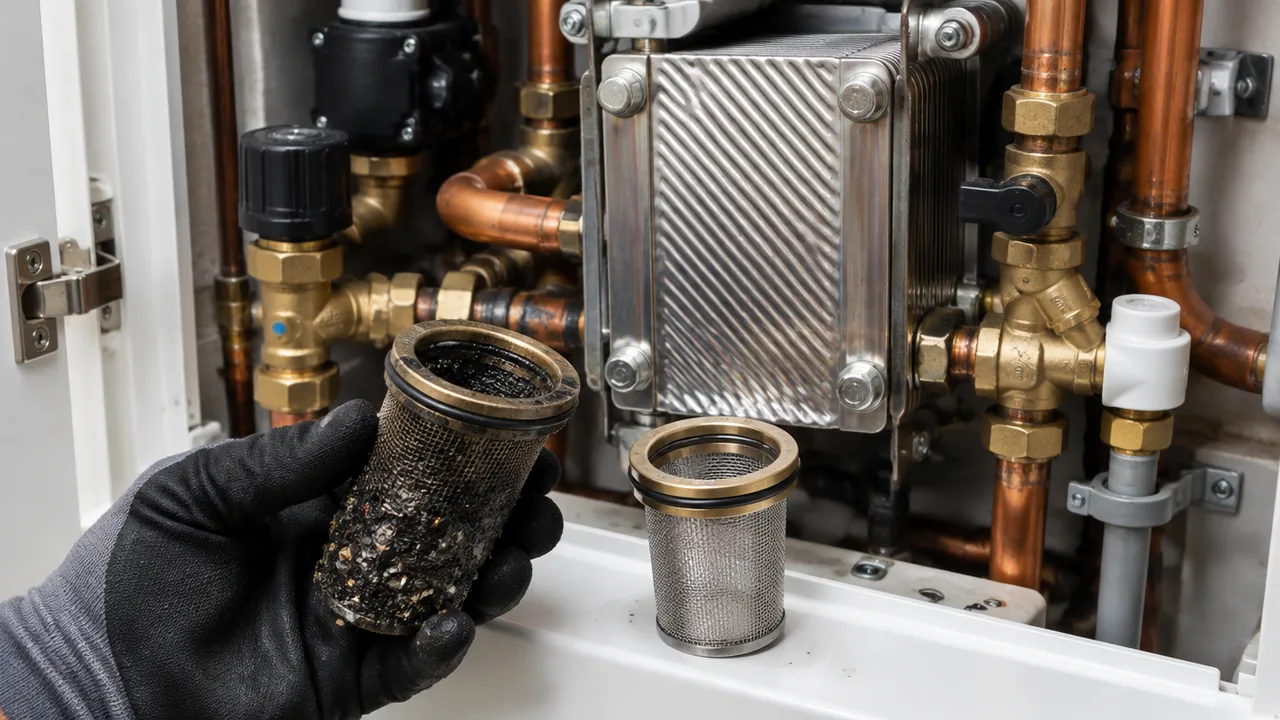
Low return temperatures are the measure of a healthy heat network.
- When every HIU is clean and correctly set, water leaves each flat cool and the plant room works efficiently.
- When strainers block, valves stick or bypasses are left open, return temperatures climb and the whole block pays for heat that was never used.
- Planned maintenance finds these faults unit by unit, records the readings and shows the directors whether the network is getting better or worse from one year to the next.
What Does Ofgem Regulation Mean for Blocks With Communal Heating?
Since 27 January 2026 Ofgem has been the regulator for heat networks in Great Britain, under the Heat Networks (Market Framework) (Great Britain) Regulations 2025. Communal networks serving a single building divided into separate flats are within scope.
- Existing networks received deemed authorisation to keep operating.
- Operators and suppliers of relevant networks must register with Ofgem through its heat networks digital service by 26 January 2027.
- Suppliers must also register with the Energy Ombudsman's heat network scheme.
- Citizens Advice, Consumer Scotland and the Energy Ombudsman provide advice and redress for heat network customers.
In a block, the operator and supplier are usually the freeholder, the residents' management company, the RTM company or an energy services company, with the managing agent acting on their behalf.
- Registration is their responsibility, and they should read Ofgem's guidance or take advice on their own position.
- Where we help is the evidence underneath it. An asset register, a service history for every HIU, flow and return temperatures, metering checks and a fault log are what a well-run network should be able to produce, and they are exactly what a planned maintenance programme leaves behind.
How Does a Heat Network Maintenance Contract Work?
Six steps. The survey is the only one that needs much of your time.
- 1
Survey
An engineer walks the plant room, risers and a sample of flats, and lists every asset with its make, model and condition.
- 2
Tailored quote
Priced per unit at block rates, with the communal plant itemised. Repairs beyond the service are quoted and approved before work.
- 3
Access plan
Your team or the concierge notifies residents, or we send the notices and book the time slots.
- 4
Planned visits
Plant room and flats serviced on the agreed programme, each job completed on site in Maintivo.
- 5
Report after every visit
A photographed PDF report emailed the same day, with readings, work done and recommendations.
- 6
Block summary
A summary for the directors: units done, no access, faults by pattern and repairs in priority order.
Managing a portfolio of blocks? See maintenance for managing agents.
A photographed PDF report after every visit
No handwritten job sheets and no chasing. Our engineers complete each job electronically on site in Maintivo, our job management system, so the report is built as the work happens: photos, readings, work done and recommendations.
You receive it as a digital PDF by email the same day, with certificates attached where they apply, ready to forward to a landlord, a freeholder, the directors or an insurer.
- Before and after photosEvery unit and fault photographed on site
- Readings and checksTemperatures, pressures and test results recorded
- Work done and next stepsWhat was fixed, what needs quoting, when we return
- Sent the same dayDigital PDF report by email, ready to forward
How Much Does Heat Network Maintenance Cost?
We do not publish prices, because no two communal heating systems are the same. A quote is tailored after a survey and depends on the number of flats, the type of HIUs and CIUs, the plant room equipment and how often each asset needs a visit.
Flats are priced per unit at block rates, and communal plant is itemised separately so the directors can see what each part costs.
- Repairs and parts beyond the service are quoted and approved before any work starts.
- The best way to get a figure is to send the block address and the number of flats, and talk it through with Petru.
Which Areas Do You Cover for Heat Network Maintenance?
We work from our office at 3 Monck Street, Westminster, and cover all 32 London boroughs.
- Beyond London we cover a 120-mile radius, including blocks on communal heating in Essex and Hertfordshire and the rest of the Home Counties. Emergency call-outs are handled with a same-day response target.
Who this is for
- Managing agents running blocks on communal or district heating
- RMC and RTM company directors who need records they can show leaseholders
- Freeholders and portfolio landlords with several blocks
- Build-to-rent operators with HIUs in every flat
Who Carries Out the Work?
Mainteniq engineers, backed by the certifications and training below. Gas work on communal boilers is carried out by Gas Safe registered engineers.