No Hot Water in a Flat on Communal Heating: Causes and Fixes
When one flat, or a whole stack, loses hot water on a communal system, the first job is working out where the fault sits. Here is how to narrow it down.
Direct answer: if one flat on communal heating has no hot water, the fault is usually in its heat interface unit (HIU), most often a blocked strainer, scaled heat exchanger or failed sensor. If several flats are affected together, look upstream: the boilers or heat source, pumps, valves or plant controls.
Is it one flat or the whole building?
This is the question that decides everything else. Ask neighbours, or check the managing agent's fault log, before sending anyone out.
- One flat only: a local fault in that flat's HIU, its controls or its pipework.
- A few flats on the same floor or riser: a problem on that branch, such as a closed or failed valve, an air lock or a pressure issue.
- Many flats at once: a plant or network fault, which is urgent because every hour affects more residents.
What causes no hot water in a single flat?
In a flat, the HIU replaces the combi boiler. It takes heat from the communal network through plate heat exchangers and produces hot water on demand. When it struggles, hot water is the first thing residents notice. Common causes include:
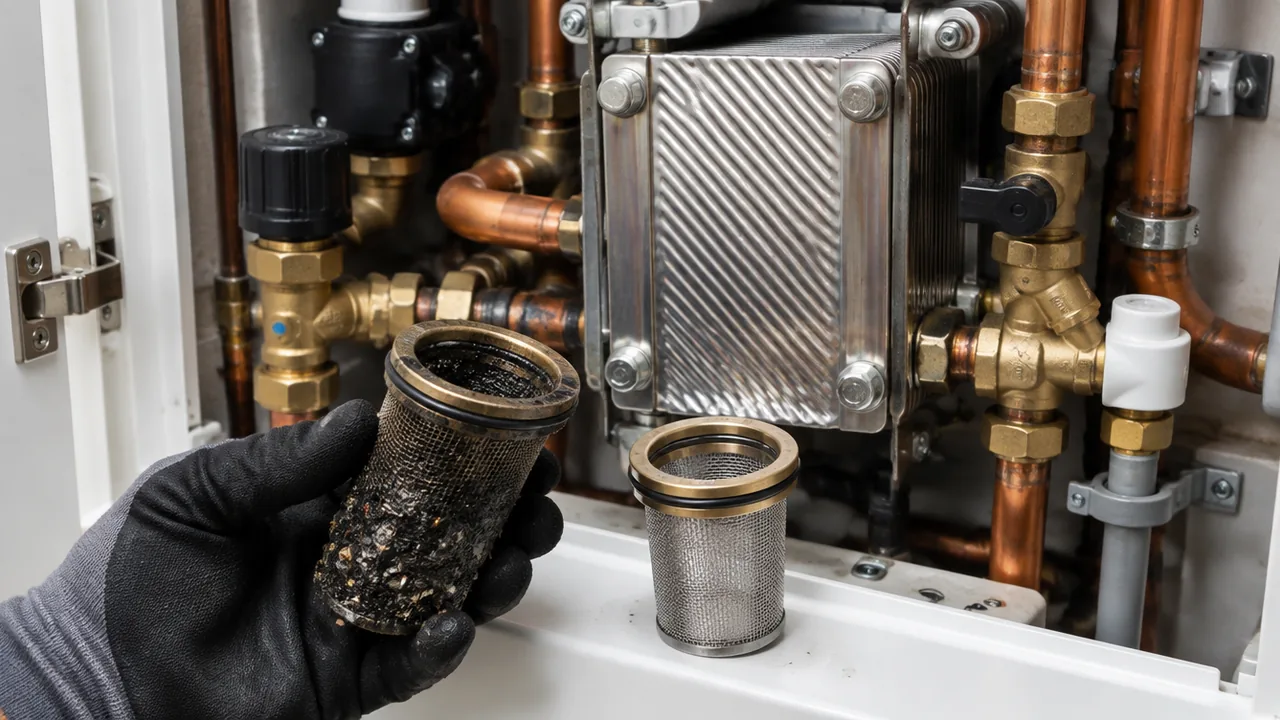
- Blocked strainer or filter. Debris in the network water collects here and restricts flow, so the water never gets hot enough.
- Scaled or fouled heat exchanger. Deposits reduce the transfer of heat into the domestic hot water.
- Failed temperature sensor or actuator. The unit cannot regulate, so it under-delivers or shuts down.
- Stuck or seized control valve. Common on units that have not been serviced for a long time.
- Closed isolation valves. Sometimes left shut after other works in the flat.
- Thermostat, programmer or power supply. A flat-level control that is not calling for heat, or an HIU with no electrical supply.
What causes no hot water across several flats?
When a number of flats lose hot water together, the cause is rarely inside the flats. Typical building-level causes are:
- A boiler or other heat source that has locked out or tripped.
- A pump failure or low system pressure on the network.
- A plant room valve in the wrong position after maintenance.
- A controls or building management fault that has stopped the plant calling for heat.
- Air or debris in the network affecting a whole riser.
These need an engineer on site quickly. If you are a managing agent, our emergency heating and hot water repair service is set up for exactly this situation, and the heat network maintenance work we do is aimed at stopping it happening in the first place.
What should a resident check first?
Residents should not open the HIU. A few safe checks can save a call-out and help the engineer:
- Check the flat's thermostat or programmer is on and calling for heat.
- Check the HIU has power, where it has a visible display or indicator.
- Check whether the cold supply is working normally.
- Note any error code, noise or leak, and take a photo.
- Report it to the managing agent or operator, saying whether neighbours are affected.
What should a managing agent do?
Treat the report as a possible building-level fault until you know otherwise. Log the time, flats affected and any error codes, then arrange an engineer. If the pattern points to one HIU, ask for the strainer, heat exchanger, valves and sensors to be checked and for the findings to be recorded.
If the same flats keep failing, the real fix is a servicing cycle. An annual HIU service removes the blocked strainers and scaled exchangers behind most repeat call-outs, as set out in our guide on how often an HIU should be serviced.
Is lukewarm water a safety issue?
It can be. The Health and Safety Executive says that where temperature is used to control legionella, hot water should be stored at 60°C or above and distributed at 50°C or above. Lukewarm water that persists should be raised with whoever holds the water risk assessment, so the cause is found and the assessment reviewed. Where gas-fired plant is involved, gas work must be carried out by Gas Safe registered engineers.
Quick diagnosis table
| What you see | Likely area | Typical first action |
|---|---|---|
| One flat, no hot water | That flat's HIU or controls | Engineer inspects strainer, exchanger, valves |
| Lukewarm water in one flat | Scaled exchanger or blocked strainer | Service the unit and record settings |
| Several flats on one riser | Branch valve, air or pressure | Check riser valves and system pressure |
| Many flats, whole building | Plant, pumps or controls | Urgent plant room attendance |
Sources
Related services & guides
Talk to a London maintenance specialist
Whether it's one property or a portfolio, we'll put your compliance and servicing on a single planned maintenance contract. Get a no-obligation quote.