Winter Readiness Checklist for Residential Blocks
The first cold week is the worst time to find out that a pump has seized or a strainer is blocked. Here is what managing agents should check on communal heating, hot water and compliance before winter.
A winter readiness check for a residential block means testing the communal heating plant, every heat interface unit (HIU), the controls and the water hygiene regime before demand peaks, and confirming that gas safety and heat network records are in date. Finding faults in autumn means planned repairs, not emergency call-outs.
Why does a block need a winter check at all?
Communal heating sits idle or runs at low load through the summer. Pumps can seize, valves can stick and strainers silt up unnoticed, and the first real cold snap is when everything is asked to work at once.
For a managing agent, a failure then does not affect one flat. It can affect every flat on the same riser or network, and the complaints arrive together.
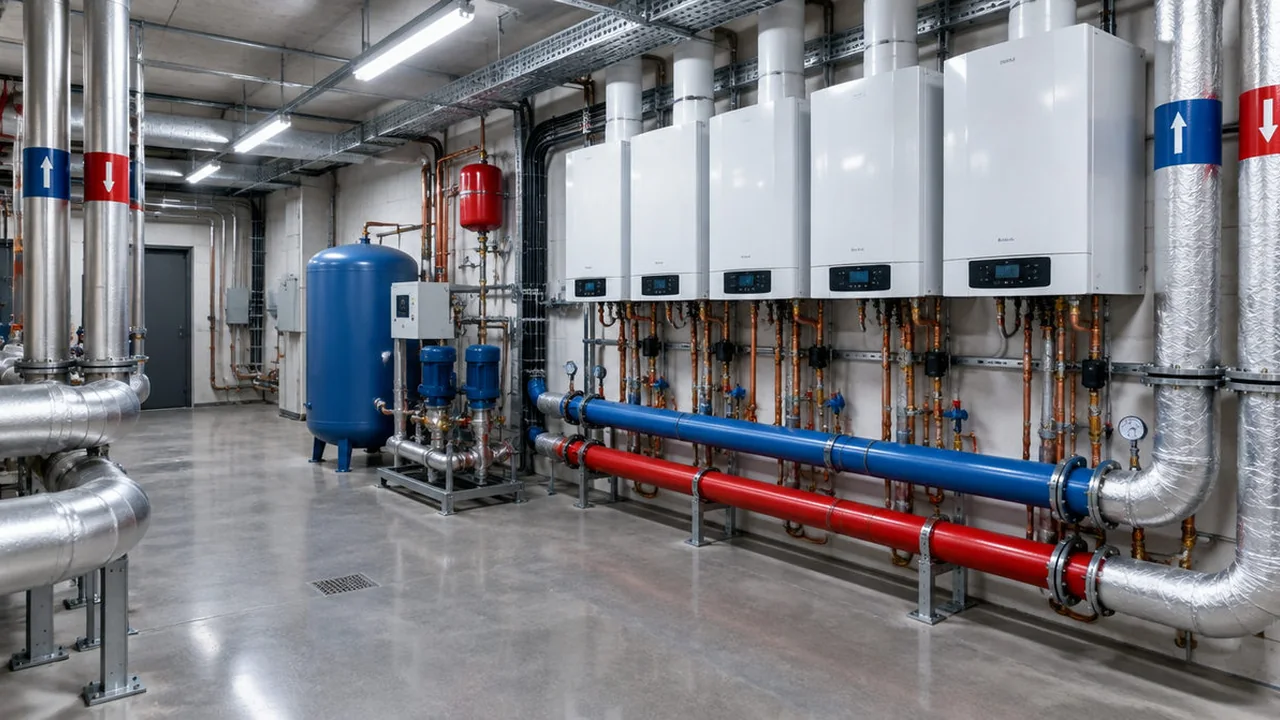
What should be checked in the plant room?
Start at the source, because every flat depends on it. A competent engineer should:
- Prove that boilers, heat sources and standby units start and run, not just that they are switched on
- Check circulation pumps for noise, vibration, leaks and correct changeover between duty and standby
- Inspect valves, expansion vessels, pressurisation units and strainers, and clean or replace where needed
- Review alarms and fault history on the controls, and clear anything left over from last season
- Confirm time schedules, set points and weather compensation still suit the building
If the building has a building management system, check that alarms actually reach the people who need them.
What about the HIUs in each flat?
On a communal system the HIU is what turns network heat into heating and hot water for a flat. Blocked strainers and fouled heat exchangers are common reasons for weak hot water, so units that have not been serviced this year should be at the front of the queue.
Our guide on how often an HIU should be serviced explains the annual cycle. Where access to flats is hard to arrange, start booking visits now rather than in December.
Does legionella still matter in winter?
Yes. The HSE says outlets on hot and cold water systems should be used at least once a week to minimise stagnation, and that unoccupied properties need a suitable flushing regime or other measures. Its guidance also sets out the temperature ranges for hot water storage, hot water distribution and cold water, and recommends monitoring sentinel outlets.
In a block, empty flats, void periods and rarely used outlets are the weak spots, and the risk assessment should be reviewed if anything about the building has changed.
Which compliance records should be in date?
Winter is a good moment to look at the paperwork as well as the plant. The table below is a quick audit list.
| Area | What to confirm | Source |
|---|---|---|
| Gas safety | Each landlord-let flat with gas appliances has a check within the last 12 months by a Gas Safe registered engineer, with the record issued to the tenant | HSE |
| Water hygiene | Legionella risk assessment is current, flushing of low-use and void outlets is happening and logged | HSE L8 / HSG274 |
| Heat network | Existing networks are registered with Ofgem by 26 January 2027, and operator details are recorded | Ofgem |
| Plant and HIUs | Service dates, findings and outstanding defects are recorded in one place | Your maintenance log |
Heat networks have been regulated by Ofgem since 27 January 2026. Our article on the 2026 heat network regulations for managing agents covers who has to register.
How should residents and empty flats be handled?
Residents are your early warning system, but only if they know how to report a problem. Before winter, remind them how to log a heating or hot water fault, and make sure the reporting route reaches someone who can act on it quickly.
Empty and part-furnished flats need their own plan. Heating that is switched off in a void flat can leave pipework exposed to cold, and unused outlets can stagnate. Agree who has keys, who inspects voids, and how often, so that a leak or a frozen pipe in an unoccupied flat is found early rather than after it has damaged the flats below.
What should be agreed with the maintenance contractor?
A checklist is only useful if someone owns each line. Before the heating season, agree in writing with your contractor:
- Which plant, HIUs and controls are covered, and when each is due for service
- Who is the named contact for faults, and how residents' reports reach them
- What records you will receive after each visit, so the building file stays complete
- Which spares and replacement parts are the contractor's responsibility to hold or source
This is the practical benefit of planned over reactive work: the contractor already knows the building, the history of each unit and the likely weak points, so a fault becomes a short job rather than a long diagnosis.
What happens if heating fails anyway?
Even a well-maintained block can have a failure. What reduces the damage is knowing in advance who to call, which flats are affected and what the plant history is. A block maintenance contract gives your contractor that knowledge, and our heat network maintenance service covers the plant, pipework and units together. For urgent faults, see emergency heating repair.
Sources
Related services & guides
Talk to a London maintenance specialist
Whether it's one property or a portfolio, we'll put your compliance and servicing on a single planned maintenance contract. Get a no-obligation quote.