BMS maintenance · London and the Home Counties
BMS Maintenance and Servicing in London, for New and Older Systems
Planned BMS servicing, fault finding and repair for residential blocks, heat networks and commercial buildings, including older systems where the original installer has gone or nobody has the passwords.
- Free site visit
- Digital report with photos
- Fixed quote before any work
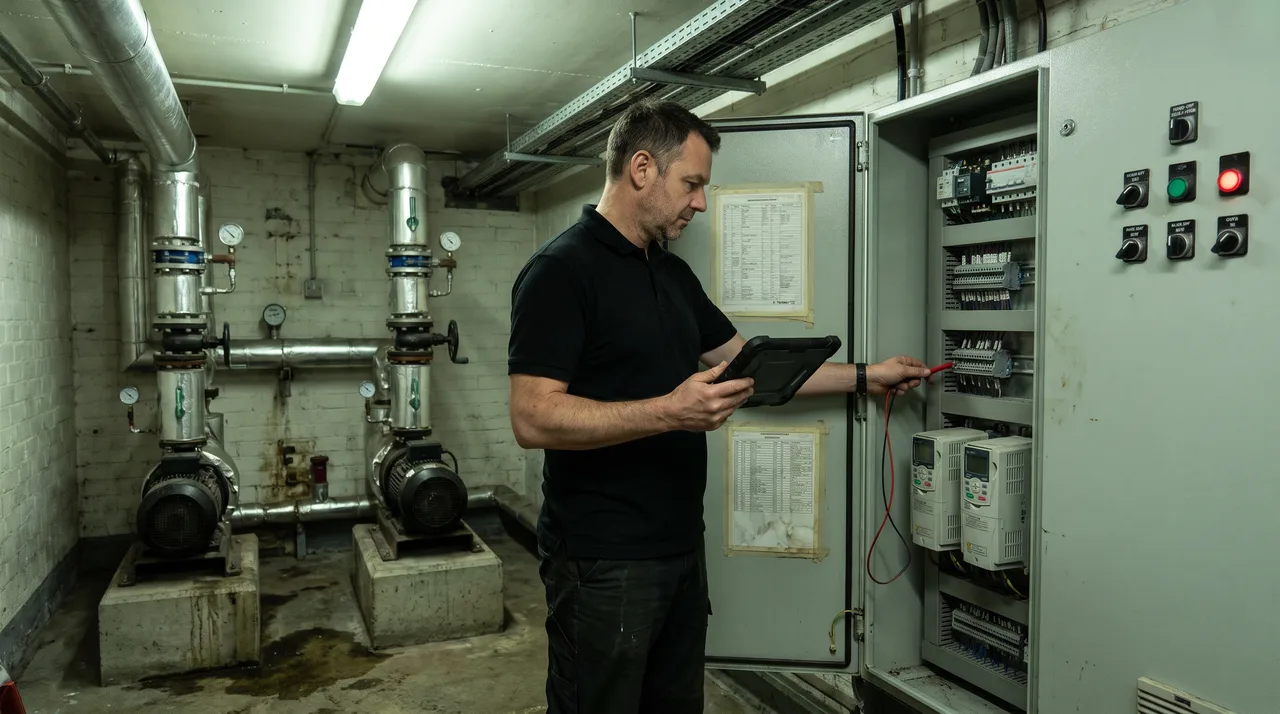
What is building management system (BMS) maintenance?
Building management system maintenance, or BMS maintenance, is the planned servicing of a building management system: checking that the controllers, sensors, valves and actuators work and read correctly, reviewing alarms, schedules and setpoints, backing up the software, and fixing faults before they reach the plant or the people in the building.
Mainteniq maintains building management systems across London and the Home Counties for managing agents, block managers, Build-to-Rent operators and owners of commercial buildings. Every job starts with a site visit (free in London, and free for larger jobs in the Home Counties) and ends with a digital report with photos. New installations and upgrades are covered on our building management systems page.
Free site visit
We come and see the system and the problem before we quote.
Digital report with photos
Readings, photos and findings, sent to you by email.
Older systems welcome
Existing and legacy BMS taken over and kept running.
Multi-platform engineers
Trend, Tridium Niagara, Siemens, Honeywell and more.
Quick check
Does your BMS need attention?
Tick what sounds like your building. Each sign points to a different part of the system.
Tick anything that sounds familiar
Most buildings recognise two or three of these. Each one points to a different part of the system.
Free site visit. Digital report with photos. Fixed quote before any work starts.
What a BMS Service Visit Covers
A BMS has four layers, and faults hide in all of them. A proper service checks each one, from the screen in the office to the sensor on the pipe.
Front end and alarms
The screen your team or contractor looks at- A test alarm sent to prove it reaches the right person
- Alarm history reviewed and repeat or nuisance alarms traced to their cause
- Key trend logs reviewed for gaps
- User accounts reviewed and access handed to you
- Software and settings backed up, with where the backup is kept recorded
- Graphics checked against the installed plant on the annual visit
Controllers (outstations)
The boxes in the panel that make the decisions- Controllers counted: how many should be online against how many are
- Network communications and controller clocks checked
- Time schedules and setpoints checked against the agreed values
- Hand overrides found, cleared or reported, never left without telling you
- Panels, wiring, terminations, power supplies and backup batteries checked
- Once a year: firmware, restart after power loss and safe state if the network drops
Field devices
Sensors, valves and actuators out on the pipework- Sensors checked against a calibrated reference instrument: within 1 °C, 5 %RH or 100 ppm CO2
- Valves and actuators commanded from the BMS and seen to respond
- Pumps and fans proven to start, stop and respond to the controls
Plant and connected systems
What the BMS is there to run- Boilers, pumps, air handling units and chillers checked under BMS control
- Fan coil units, heat interface units and ventilation checked where they are linked
- Energy meters checked so the readings can be trusted
- System left running in automatic at the end of the visit
Then the report
A digital report with photos, readings, the faults we found, what we fixed on the day and what needs quoting, sent by email so you can forward it to the directors, the landlord or the insurer.
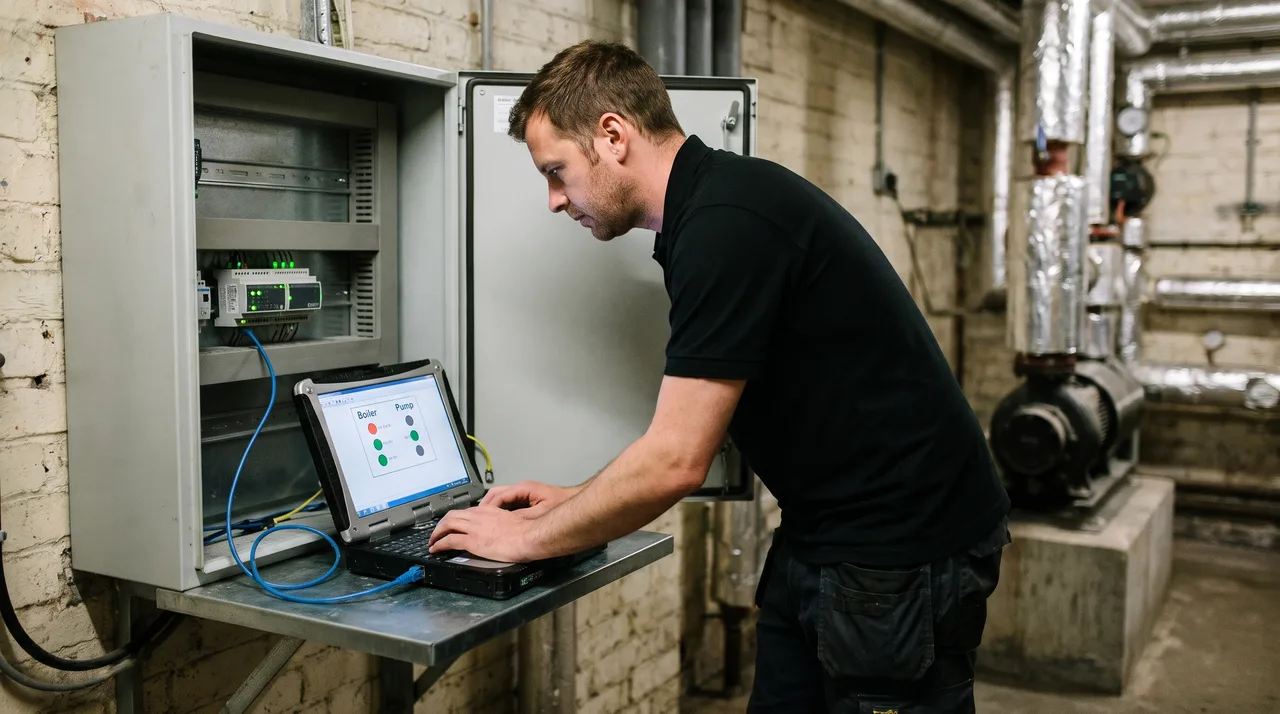
Visits that change nothing
Why Some BMS Contracts Feel Like Money for Nothing
“They come every quarter, tick a sheet, and the building is still too hot on the third floor.” Many of the buildings we take over had a maintenance contract. It just never changed anything.
The usual reason is a visit that checks the BMS is switched on, not that it is still right. Schedules are never compared with how the building is used now, alarms are cleared rather than fixed, and nobody looks at the plant the BMS controls. Our visits are built the other way round: a named task list, readings and photos, the changes we made, and the faults we found on the controls and the plant.
A named task list
What is checked on each visit, agreed at the start, so you can see what you are paying for.
Schedules against occupancy
Plant times compared with how the building is really used now, after hybrid working and tenant changes.
Alarm review
Nuisance alarms fixed at the cause and priorities set, so the alarms left are the ones worth acting on.
Controls and plant together
We service the valves, pumps, fan coils and air handling units as well as the BMS. See air conditioning and heating maintenance.
Changes recorded
Every setpoint or schedule we change is written in the report, with the reason, so nothing is a mystery later.
Proof every visit
A digital report with readings and photos, plus a fresh backup of the system.
How It Works
- 1
Free site visit
An engineer looks at the controls, the plant and the problem you called about.
- 2
Digital report with photos
Photos, readings and findings by email, so you see exactly what we saw.
- 3
Fixed quote
A one-off repair, a maintenance contract, or both. Nothing starts until you agree.
- 4
Planned visits
Servicing at the agreed frequency, with a new report after every visit.
A photographed PDF report after every BMS site visit
No handwritten job sheets and no chasing. Our engineers complete each job electronically on site in Maintivo, our job management system, so the report is built as the work happens: photos, readings, work done and recommendations.
You receive it as a digital PDF by email the same day, with certificates attached where they apply, ready to forward to a landlord, a freeholder, the directors or an insurer.
Every BMS visit follows the same service form, in 8 sections: the visit, panels and network, sensors and outputs, control, alarms and logs, backup and access, annual checks, and finish. 41 fields in all, so nothing depends on memory.
- Panels and faults photographedEvery panel, controller and fault, before and after
- Sensors against a referenceBMS readings checked against a calibrated instrument
- Pass, fail and what we didEvery check marked, with the action taken on any fail
- Sent the same dayDigital PDF report by email, ready to forward
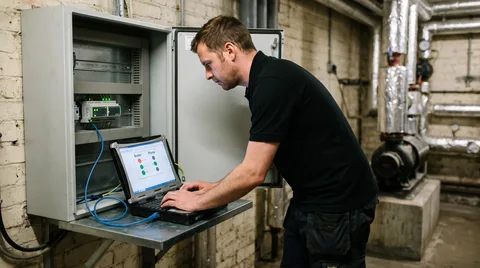
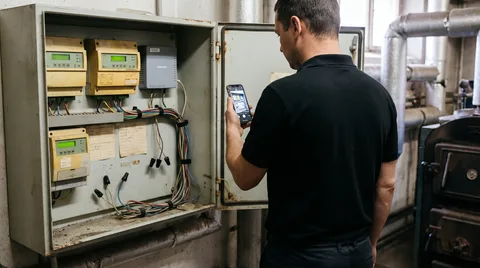
Example layout. Completed on site in Maintivo.
Fault finding and repair
BMS Fault Finding: We Fix the Cause, Not the Symptom
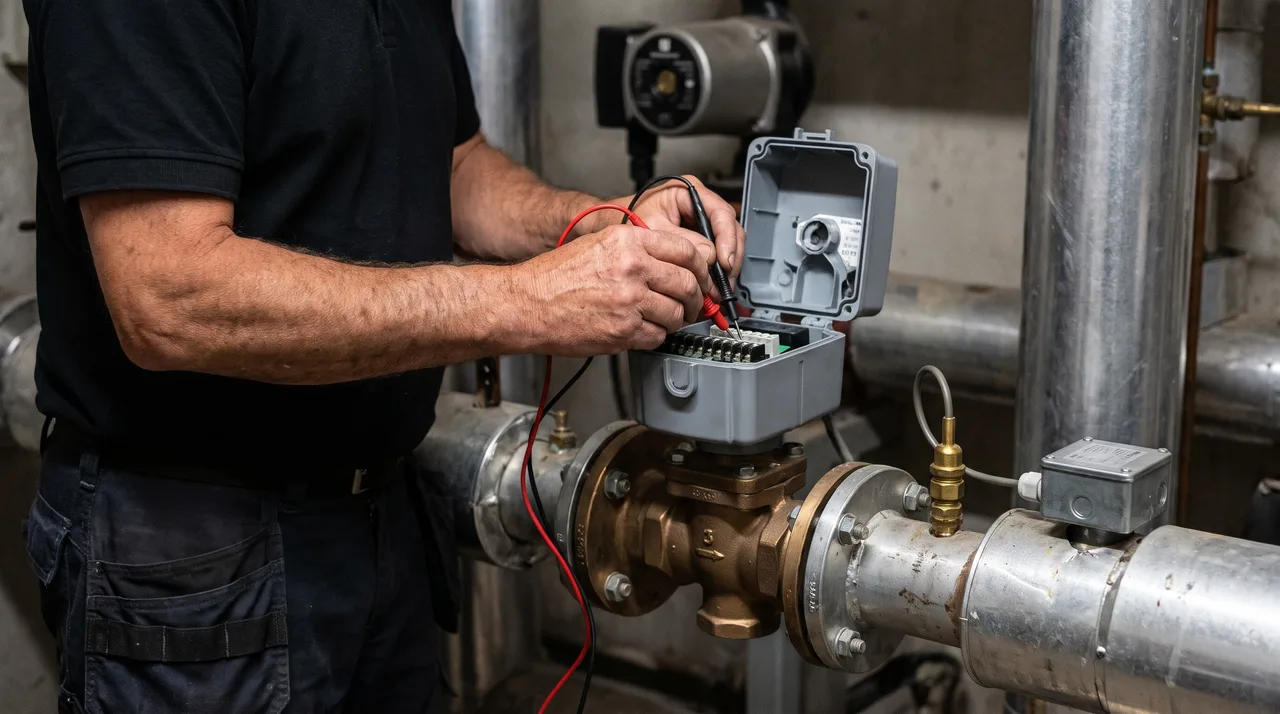
When a BMS goes wrong, the symptom is rarely where the fault is. A cold flat can be a failed sensor, a stuck valve, a lost time schedule or a controller that has dropped off the network. We trace the fault to its cause and fix that, rather than resetting the system and leaving.
Because we maintain the plant as well as the controls, the same engineer can follow a fault from the BMS screen to the valve, pump or fan coil, so you are not passed between a controls contractor and a mechanical one. Fault visits start the same way as everything else: a free site visit to see the problem, then a report with photos and a fixed price for the repair.
Report a BMS fault on WhatsAppController offline
A panel has dropped off the network, so part of the building runs blind.
Communication errors
Data between controllers and the front end is lost or delayed.
Sensor reading wrong
One bad reading can heat or cool a whole zone in the wrong direction.
Valve or actuator stuck
The controls ask for heat and nothing moves on the pipe.
Plant not starting
Pumps, boilers or air handling units that will not run on schedule.
Alarm floods
So many alarms that the real ones get ignored or silenced.
Taking over a system
No Passwords, No Files? The Building Should Own Its BMS
The most common thing we hear from new clients is that the last contractor kept everything: the passwords, the project files and the software licences. Every change then needs that contractor back.
When we take over a BMS we document it and hand the information to you: passwords, backups, the points list and the graphics. Software licences are registered in your name wherever the manufacturer's licence allows it. It depends on the system, so where a licence cannot be transferred, we tell you up front.
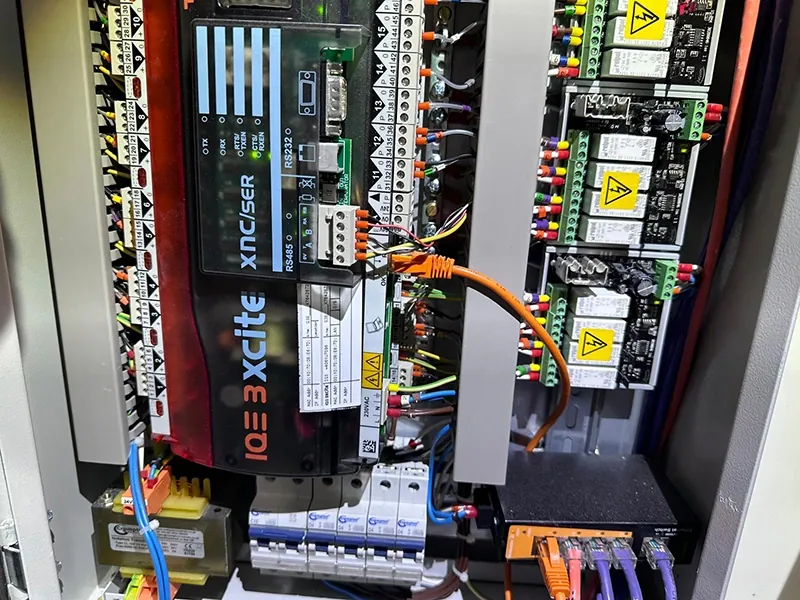
Passwords and accounts
Administrator access held by the building, named accounts for your team and for each engineer.
Backups and points list
A fresh backup on every visit and a points list kept up to date, stored where your team can reach it.
Licences in your name
Wherever the manufacturer allows it. Where it does not, you hear it from us before you sign.
Older and inherited systems
Older BMS? We Keep It Running, Then Plan What Comes Next
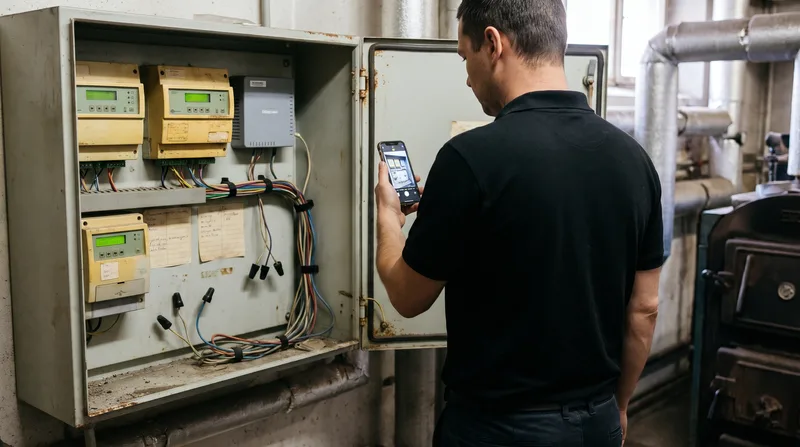
Many building management systems in London are years old, and plenty were left behind when the company that installed them moved on. We take over existing systems, document what is there and keep them serviced.
When parts get hard to find, we give you an honest view: keep repairing, upgrade in stages, or replace. Wherever they are sound, we keep the sensors, valves and wiring, which is usually where most of the original cost went.
- Takeover of systems with no current contractor
- Points list, drawings and settings documented and handed to you
- Staged upgrades that keep the building running
- No lock-in: the system, passwords and backups stay yours
Repair, Upgrade in Stages, or Replace?
Three honest routes for an older BMS. We tell you which one fits after the free site visit, with photos of what we found.
Repair and maintain
- Best when
- Parts are still available and the controllers are stable.
- What we keep
- Everything that works.
- What changes
- Faulty sensors, valves, actuators or a failed controller, like for like.
- Disruption
- Minimal. Usually done during a service or fault visit.
Upgrade in stages
- Best when
- Some controllers or the front-end PC are obsolete, but the field wiring and devices are sound.
- What we keep
- Sensors, valves, actuators and most of the wiring.
- What changes
- Controllers panel by panel, and the old front end for a supported, web-based one.
- Disruption
- One plant area at a time, while the building keeps running.
Replace
- Best when
- The system is unsupported throughout, the wiring is unsafe, or the building is used differently now.
- What we keep
- Whatever tests sound.
- What changes
- A new BMS designed around how the building is used today.
- Disruption
- Planned in phases and quoted as a project.
Between visits
Remote BMS Monitoring and Smart Energy Analytics
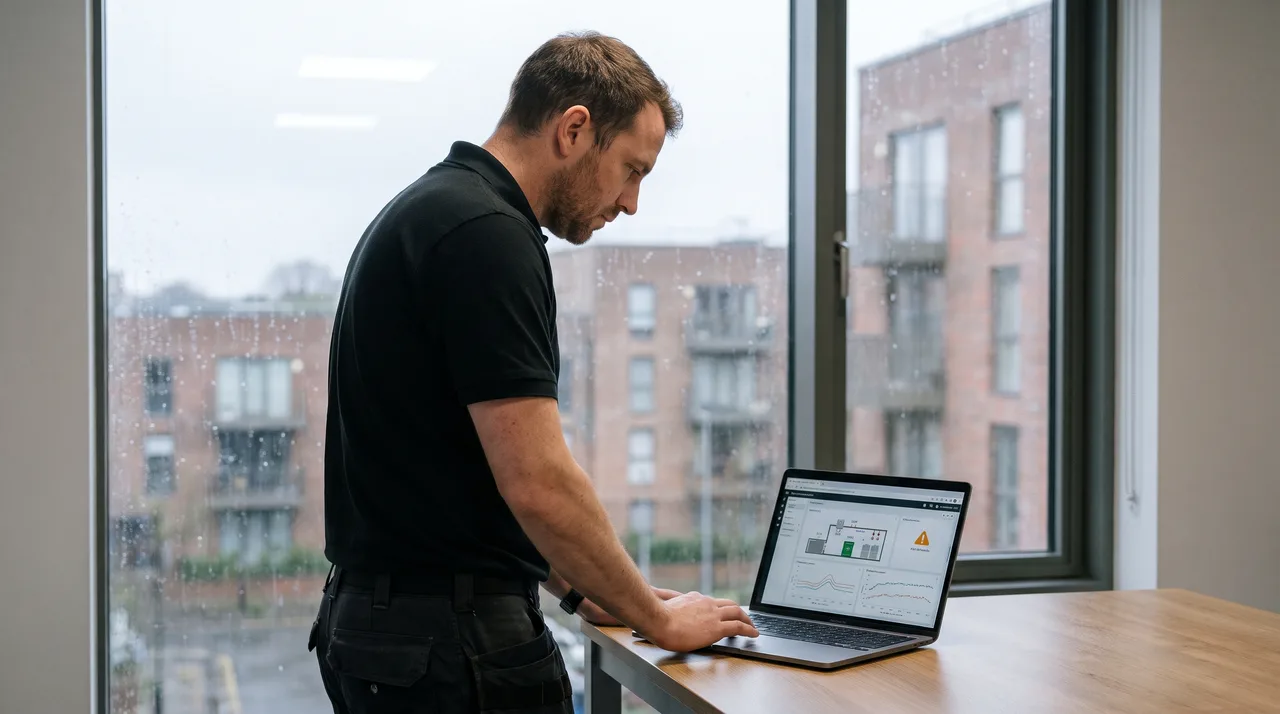
Maintenance does not have to wait for the next visit. Where the building suits it, we connect the BMS to remote monitoring and analytics software, including AI-based fault detection. Alarms and unusual energy use are flagged as they happen, and each visit starts with the data already read. Remote access is only set up where your IT team agrees, through a route they approve, with named accounts and no shared passwords.
- 1Sensors and plantAlarms seen remotely, not only on the plant room screen
- 2AnalyticsEnergy use compared with schedules and the weather
- 3Early warningFaults spotted early from trend data, before residents notice
- 4OptimisationBMS optimisation: schedules and setpoints tuned from real data
Remote access and cyber security
Remote Access Your IT Team Can Sign Off
“IT won't let another contractor onto the network.” Often they are right to be careful: old BMS connections are some of the least protected routes into a building's network.
We can connect remotely where the building's IT team and the system allow it, and only then. The route is agreed with your IT team first, in line with the IET Code of Practice for Cyber Security in the Built Environment and the NCSC and NPSA guidance on building control systems. Where remote access is not agreed, we attend in person.
A route IT approves
Through your own VPN or another method your IT team chooses. No hidden modems or unknown connections.
Named accounts only
Each engineer has their own login. No shared passwords, and access you can switch off at any time.
Supported software
Front-end PCs still on Windows 10, unsupported since 14 October 2025, flagged with the options to move them.
Energy Management and Building Monitoring
An energy management system is the part of the BMS that measures and controls energy use: metering, trend logging, time schedules, setpoints and alarms. Building monitoring is the day-to-day job of watching that data and acting on it.
Most London buildings already have the hardware; what is missing is someone reviewing it. As part of a BMS maintenance contract we review trend logs and alarms, tighten schedules and setpoints that have drifted, check that meters and sensors read correctly, and report what changed. Where a building needs new controllers, sensors or metering, we quote the installation separately and keep it platform-agnostic, working with the controls already on site wherever possible.
A properly maintained and optimised BMS is one of the most cost-effective investments for any commercial building. Poor scheduling, drifting setpoints and uncalibrated sensors silently waste energy every day. Savings of roughly 15 to 30 percent are often quoted for BMS optimisation; treat that as a rough range, as results vary with the building and the system.
- 1Identify and correct energy waste
- 2Optimise heating and cooling schedules
- 3Calibrate sensors for accurate control
- 4Implement demand-led ventilation
- 5Report what changed after each visit
One
schedule
One
point of contact
One
invoice
One team looks after the whole control layer of your building: we take over an existing BMS, tune the control strategies and setpoints so plant only runs when it needs to, keep sensors and controllers calibrated, and watch the alarms so a heating failure or plant trip is caught before occupants notice. For managing agents and facilities teams we bundle this into a single planned maintenance contract alongside your air conditioning and heating maintenance.
24/7 Emergency Line for BMS and Plant Faults
Our emergency line is answered day and night, including weekends. In London we aim to attend the same day for urgent faults such as no heating, no hot water or plant that will not run. In the Home Counties we can usually be on site within a day. Contract buildings get priority.
How Often Should a BMS Be Serviced?
Most buildings need a BMS service at least once a year. Larger or more complex systems are usually serviced every quarter with a full review once a year, in line with CIBSE Guide M. We agree the frequency at the free site visit, based on the size of the system, the plant it controls and how critical the building is.
Once a year
Smaller systems with simple plant
A full service and review each year, plus fault visits when needed.
Twice a year
Residential blocks and heat networks
Before and after the heating season, when faults hurt residents most.
Every quarter
Commercial buildings and critical plant
Quarterly visits with a full annual review, in line with CIBSE Guide M.
BMS servicing can sit inside one planned maintenance contract alongside your air conditioning and heating, HIU and FCU servicing: one schedule, one point of contact and one invoice.
Thinking of Changing BMS Maintenance Contractor?
Most of the worries about switching come down to losing control of the system. Here is how we handle each one.
“Only the original installer can maintain it”
Our engineers work across Trend, Tridium Niagara, Delta Controls, Titan Products, Siemens, Honeywell and older systems. Where a manufacturer restricts software tools or licences, we say so at the site visit.
“We'll lose the records in the handover”
The first visit is a full survey: backups of every controller, a points list and photos of each panel. You end up with better records than you had before.
“A new contractor will want to replace everything”
We keep what works. Repairs first, staged upgrades only where parts are obsolete, and nothing replaced without a fixed quote you have agreed.
“Our IT team won't approve remote access”
Then we agree the route with them first, or we attend in person. Remote access is useful, never a condition of the contract.
BMS Platforms We Maintain
Multi-platform engineers, so you can keep the controls already in your building. Not sure what you have? Send a photo of the controller and we will tell you.
Also covered: Delta Controls enteliWEB and RED5 BACnet controllers, open-protocol systems such as BACnet, and mixed or legacy estates where several makes run side by side. Specialist pages: Trend BMS, Delta Controls BMS, Tridium Niagara BMS and Titan Products BMS.
Heat networks
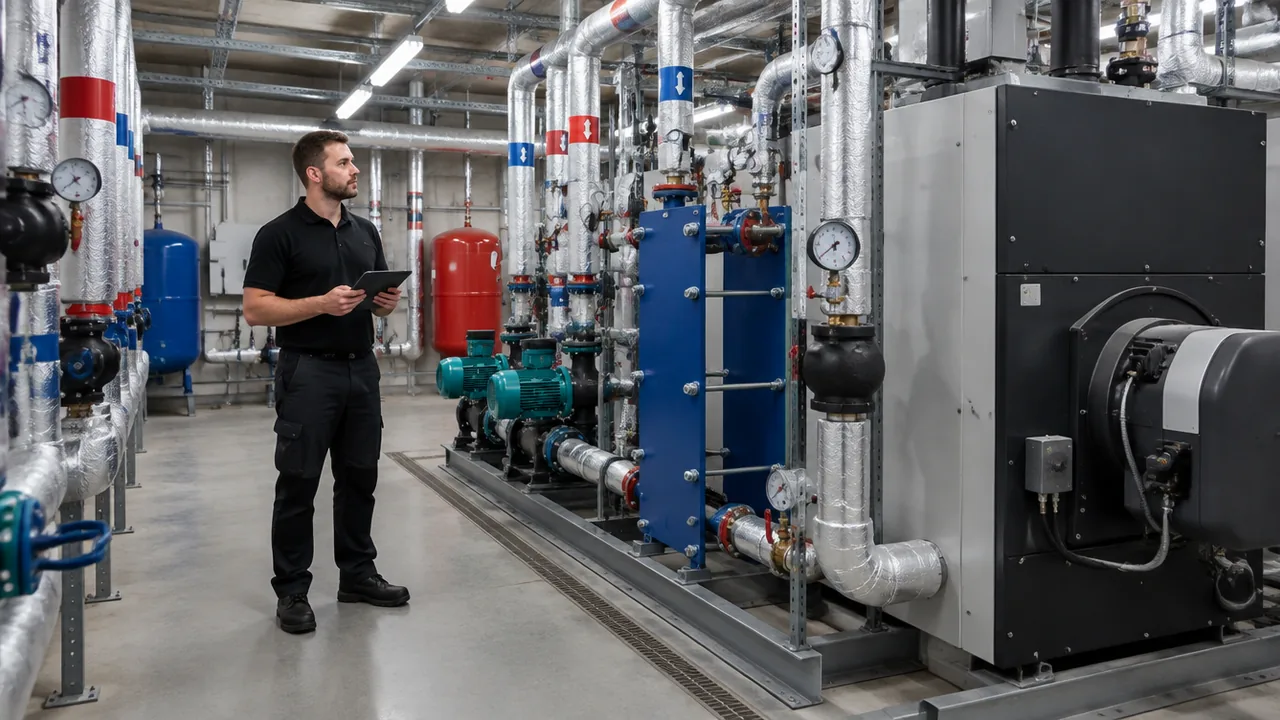
Heat networks are now regulated. Your BMS data helps show it is run properly.
Since 27 January 2026 Ofgem has regulated heat networks. A serviced BMS with trustworthy sensors, meters and alarm records makes it far easier for a block to show how its communal heating is run and maintained.
Heat network maintenanceWho We Look After
Qualifications Behind the Work
Certificate details are available on request. We cover all 32 London boroughs and a 120-mile radius across the Home Counties, including Hertfordshire, Essex, Surrey, Kent, Berkshire and Buckinghamshire.
What customers say on Google
“I've had the pleasure of working with Petru and his team on a number of maintenance jobs, and they've always been fantastic. They're professional, reliable, and complete every job to a really high standard. Petru is incredibly knowledgeable and it's clear he takes pride in his work.”
Deborah L.
Google review
“Excellent service. Price assessment: reasonable price.”
Attila B.
Google review
“The team is knowledgeable, efficient, and attentive to detail. A great choice for anyone looking for reliable maintenance services. Highly recommended!”
Ben
Google review
Related Services
Book a Free BMS Site Visit
An engineer comes to see your system and the problem. You get a digital report with photos and a fixed quote, with no obligation to go ahead.