Wet & electric · Manifolds · Controls · HIU-fed flats · London
Underfloor Heating Repair, Servicing and Controls in London
Cold rooms, cold spots, a floor that won't switch off or a system that died after the summer. We find the fault at the manifold, the controls or the heat source, fix it, and send you a report with photos and readings for every loop.
- Free site visit in London
- Report with photos per loop
- HIU and heating controls in one visit
Who repairs underfloor heating in London?
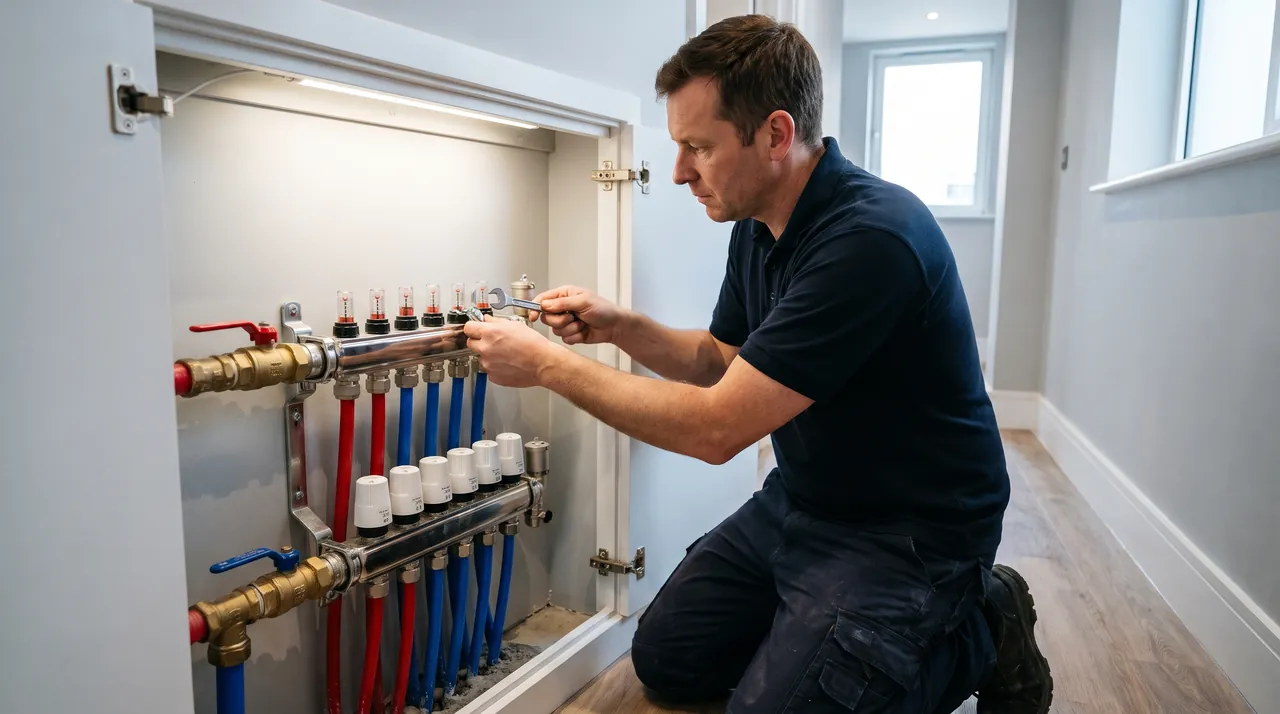
Mainteniq's underfloor heating engineers repair, service and rebalance wet and electric underfloor heating across London and a 120-mile radius. We fix cold rooms and cold spots, failed actuators, pumps and blending valves, airlocks, manifold leaks and faulty thermostats and wiring centres, and we look after the heat source too: heat interface units on communal heating, boilers through Gas Safe registered engineers, and heat pumps.
Most underfloor heating faults are not in the floor. They are at the manifold, in the controls or at the heat source, which is good news: they can usually be fixed without lifting a single tile. Our guide to underfloor heating manifold problems shows which symptom points to which part. In London new-build flats the underfloor heating very often runs from an HIU, so a cold floor can be an HIU problem, a manifold problem or both. Because we service heat interface units as well, one engineer checks the whole chain in one visit.
From our jobs
Underfloor Heating From Our Jobs
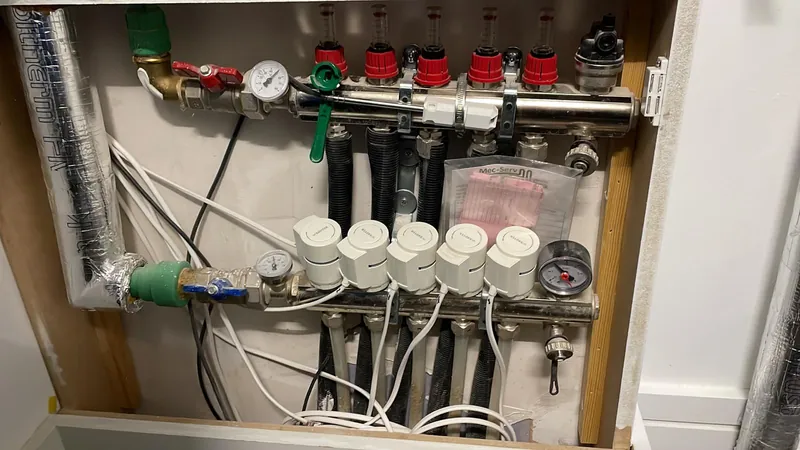
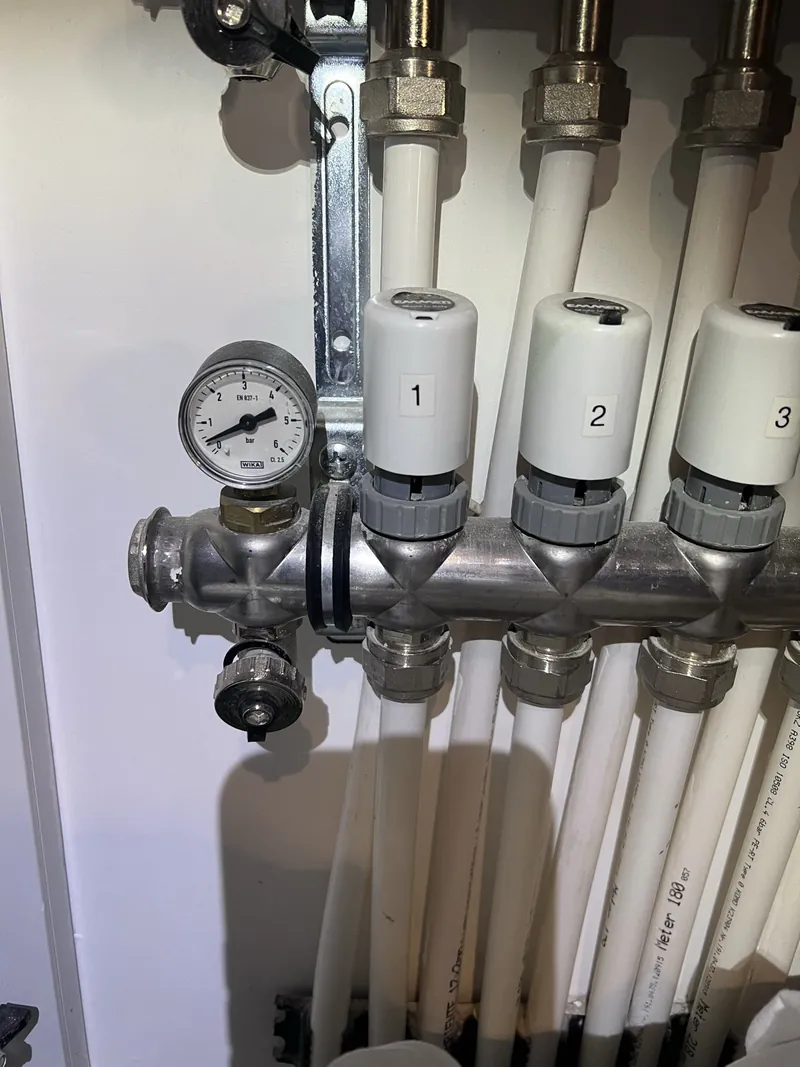
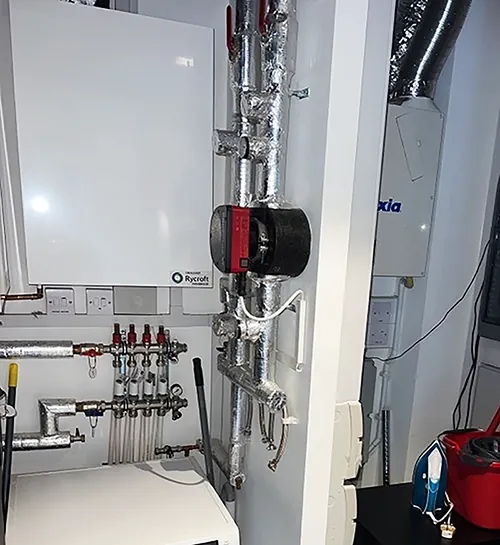
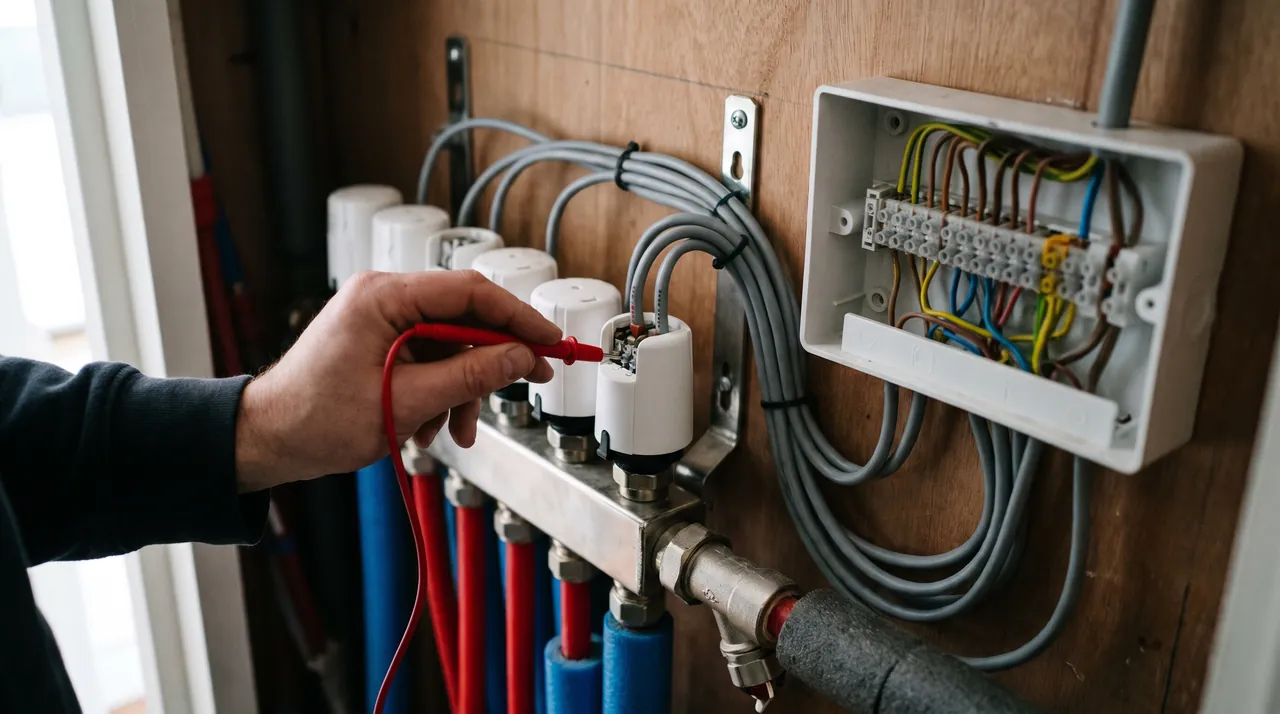
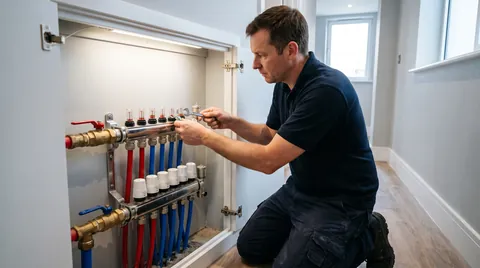
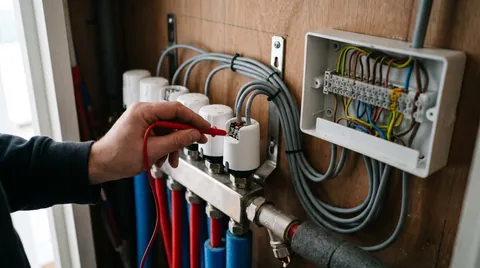
Real photos from London flats we look after. In a new-build flat the manifold usually shares a cupboard with the heating unit and MVHR, which is why we check them together.
Start here
Underfloor Heating Not Working? Where the Fault Usually Is
The pattern tells you where to look. One cold room points to that room's loop or thermostat; a cold floor everywhere points to the pump, the mixing valve or the heat source. Our guide to underfloor heating not working in one room walks through the checks step by step.
One room or zone is cold
Usually
- Actuator on that loop has failed, or its valve pin is stuck
- Room thermostat or its batteries, or a wiring centre fault
- Thermostat wired to the wrong actuator
- Manifold valve for that loop closed
The whole floor is cold
Usually
- Pump failed or full of air
- Blending (mixing) valve stuck
- No heat arriving from the HIU, boiler or heat pump
- No power to the wiring centre, or the pump relay not switching
Warm in patches, cold spots
Usually
- Air trapped in one or more loops
- Loops out of balance: flow meters set wrongly
- A partly blocked loop, often sludge in older systems
- Flow temperature set too low for the room
Won't switch off, or the floor is too hot
Usually
- Actuator stuck open, so the loop never closes
- Relay stuck on in the wiring centre
- Blending valve or controller set too high
- Floor sensor missing, faulty or not connected
Sound familiar?
Several plumbers out, and still no fix
The floor is still cold after three or four visits. One plumber bled the manifold, another changed an actuator, a third said the pipes under the floor must be blocked and suggested lifting it.
In a flat on communal heating the pipes are rarely the problem. Each visit looked at one part of the system on its own, so the real cause was never found.
Why it happens, and what we do instead
- The fault is often in the heat interface unit, its pump or plate heat exchanger, so the manifold is simply not receiving enough heat.
- Or the loops were never balanced: rooms near the manifold get the heat and the far rooms stay cold.
- We test the HIU and the underfloor heating together on one visit: flow rates per loop, flow and return temperatures, actuators, the mixing unit and the thermostat wiring.
- You get a report with readings for every loop, so the next engineer, or the managing agent, can see what was found and fixed.
Most floors are fixed without lifting anything. See HIU servicing and repair for the flat's heat source.
Know your system
How Wet Underfloor Heating Works
Two chains have to work together: the water, from the heat source down to the floor, and the controls that tell each loop when to open. A fault anywhere along either one shows up as a cold room.
The water
- Heat sourceAn HIU on communal heating, a boiler or a heat pump.Network or boiler water, often 60 to 80°C
- Pump and blending valveMixes the hot water down to a safe floor temperature and pushes it round.Usually 30 to 45°C into the floor
- ManifoldSplits the water into loops. Flow meters set each loop; actuators open and close them.5 to 10°C drop flow to return
- Pipe loops in the floorOne or more loops per room, laid in screed or in boards under the floor finish.Floor surface kept to 29°C or less
The controls
- Room thermostatCalls for heat in its room or zone
- Wiring centreSwitches the right actuators and the pump
- Actuators and pumpOpen the loop and move the water
The British and European standard for water-based underfloor heating, BS EN 1264, limits the surface of an occupied floor to 29°C, and some timber and vinyl floor finishes need it lower still. That is why the blending valve and floor sensors matter: a floor that feels hot is not working better, it is set wrongly.
What people tell us
Common Underfloor Heating Problems, and What Is Behind Them
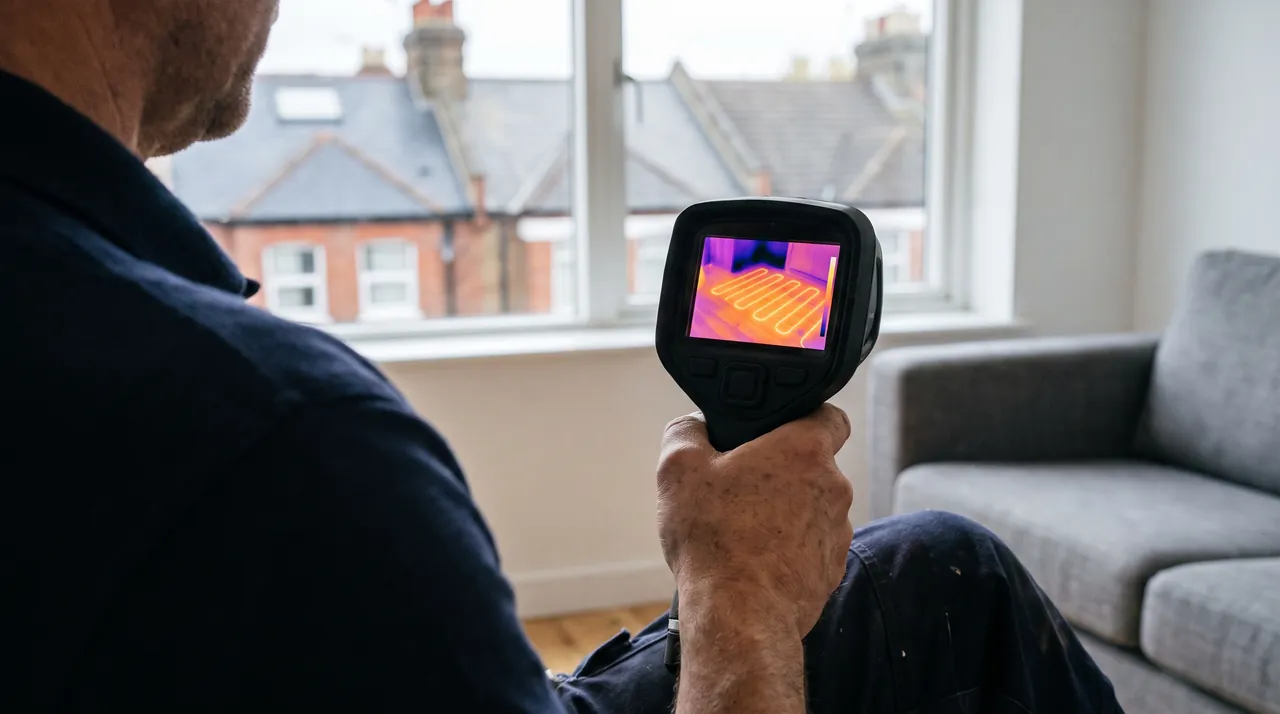
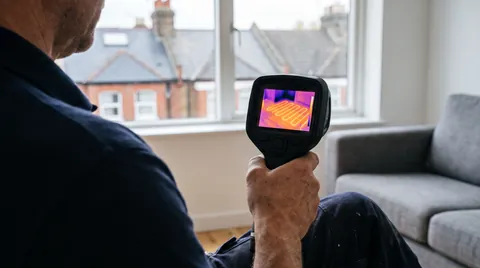
Cold spots are easy to see with a thermal camera: the warm loops show up clearly, and so does the part of the floor that isn't getting any heat.
"It stopped working after the summer"
Usually: Pumps and valve pins seize when they sit idle for months. Often freed and running again on the visit; sometimes the pump or actuator needs replacing.
"The manifold clicks, gurgles or hums"
Usually: Air in the loops, a pump set to the wrong speed, or a failing pump. We purge the air and set the pump properly.
"A flow meter shows nothing"
Usually: That loop is closed, blocked or airlocked, or its balancing valve was shut by mistake. We find which, clear it and rebalance.
"The pressure keeps dropping"
Usually: A weeping joint at the manifold or the HIU, a faulty relief valve, or a flat expansion vessel. We find the leak before it marks the ceiling below.
"It takes forever to warm up"
Usually: Screed floors are slow by nature: hours, not minutes. Switching right off makes it worse. We set a lower setback temperature instead, and check the flow is right.
"The bills went up"
Usually: Loops out of balance, a blending valve set too hot, or the heating running in empty rooms. Balancing and proper controls fix most of it.
For managing agents and flat owners
Underfloor Heating in Flats on Communal Heating
Many London new-build blocks have no boiler in the flat. Heat comes from the building's heat network through a heat interface unit, then through a pump and mixing unit into the underfloor heating manifold.
When residents say the floor is cold, three different parts could be to blame, and they are often looked after by three different contractors. We check all three on the same visit: the HIU, the mixing unit and the manifold, so nobody passes the problem along.
HIU servicing for blocksServicing
What an Underfloor Heating Service Includes
Wet underfloor heating should be serviced once a year, ideally before the heating season. It is low-temperature water sitting in long plastic loops, so air, sludge and bacteria build up slowly and parts that sit still all summer can stick.
If the water is dirty or a loop is blocked, we recommend a flush, priced separately in your fixed quote. Industry water treatment guidance now recommends a biocide as well as inhibitor in low-temperature systems like underfloor heating.
Should I switch underfloor heating off when I go out?
Usually not. A screed floor takes hours to warm up from cold, so turning it right off and on again can use more energy and leaves the room cold. A setback temperature a few degrees lower works better, and good controls do it automatically.
Our annual service checklist
- Pressure checked at the manifold and topped up
- Air purged from every loop
- Flow meters balanced so each loop gets its share
- Flow and return temperatures recorded per loop
- Every actuator tested: opens, closes, and is on the right thermostat
- Pump and blending valve checked and set
- Manifold and connections checked for leaks and corrosion
- Inhibitor level tested; biocide added where needed
- Magnetic or dirt filter cleaned
- Thermostats, floor sensors and wiring centre tested
- Photographed report with readings for every loop
Controls and smart
Underfloor Heating Thermostats, Wiring Centres and Smart Controls
Most "the heating has a mind of its own" problems are controls problems. Get the controls right and the floor behaves.
Wiring centres
The box beside the manifold that links every thermostat to its actuators and the pump. Relays stick, terminals work loose and zones get swapped. We test and re-label them, or replace the board.
Room-by-room control
Building Regulations Part L expects new homes to have room-by-room temperature control, or zone control where rooms are similar. If one thermostat runs the whole flat, we can split it into zones.
Smart underfloor heating controls
Dedicated smart systems such as Drayton Wiser and Heatmiser neoHub control each zone from your phone. Not every smart thermostat can run underfloor zones properly, so we check before recommending one.
Want the underfloor heating on the same app as your lights, locks and blinds? See smart home installation, or for whole-home systems such as KNX, home automation systems.
Electric systems
Electric Underfloor Heating Repair
Electric mats and cables, usually under bathroom and kitchen tiles, need far less maintenance than wet systems. When they fail, it is normally one of these four things.
Mat or cable damage
A screw, a nail or a cracked tile can damage a heating cable. We test the insulation with the right test voltage for that make and compare the resistance with the label value.
Floor sensor faults
An error code on the thermostat often means the floor sensor has failed or come loose. We measure it and, where it can be reached, replace it.
RCD keeps tripping
A tripping RCD means the system has found a fault, often moisture or damaged cable. We find it rather than resetting it and hoping.
Thermostat and wiring
Faulty or badly wired thermostats, loose connections and the wrong settings, put right by NICEIC certified electricians.
Electrical work is carried out by NICEIC certified electricians to BS 7671. New floor heating circuits and new circuits in bathrooms are notifiable under Part P of the Building Regulations, and we notify them where required; most repairs and like-for-like replacements are not.
Underfloor Heating Leak Detection
Most leaks are at the manifold, its valves and its connections, where they can be reached and fixed. Leaks in the floor itself are less common and usually come from a screw or drill through a pipe.
- Pressure keeps dropping and needs topping up
- Damp or staining near the manifold cupboard
- A warm, damp patch on the floor or the ceiling below
We find the leak before anything is taken apart
- 1Pressure test the system and check the manifold, valves and connections
- 2Test loop by loop at the manifold to see which one is losing pressure
- 3Pinpoint the leak on that loop, so only the smallest area is opened, if any
Planned Service or Wait for It to Fail?
Annual service before winter, at a time that suits you
Seized pumps and actuators found while they are still cheap fixes
Balanced loops: even heat and lower bills
Cold floors in the first cold week, when every engineer is busy
Leaks found when they reach the flat below
Sludge left long enough to block loops for good
Underfloor heating can sit inside a planned maintenance contract with the HIU, boiler or heat pump.
How an Underfloor Heating Repair Works
- 1
Free site visit
We look at the manifold, the controls and the heat source, and see which rooms are cold. Free in London; in the Home Counties, free for larger jobs.
- 2
Digital report with photos
What we found loop by loop, with readings and photos, sent by email.
- 3
Fixed quote
Repair, service or rebalance, explained in plain English and priced before any work starts.
- 4
Fixed and recorded
The work done, the floor warm again, and a new report with before and after readings.
A photographed PDF report after every underfloor heating visit
No handwritten job sheets and no chasing. Our engineers complete each job electronically on site in Maintivo, our job management system, so the report is built as the work happens: photos, readings, work done and recommendations.
You receive it as a digital PDF by email the same day, with certificates attached where they apply, ready to forward to a landlord, a freeholder, the directors or an insurer.
- Before and after photosEvery unit and fault photographed on site
- Readings and checksTemperatures, pressures and test results recorded
- Work done and next stepsWhat was fixed, what needs quoting, when we return
- Sent the same dayDigital PDF report by email, ready to forward
Example layout. Completed on site in Maintivo.
Qualifications Behind Our Underfloor Heating Work
Gas work on boilers is carried out by Gas Safe registered engineers.
What customers say on Google
“I've had the pleasure of working with Petru and his team on a number of maintenance jobs, and they've always been fantastic. They're professional, reliable, and complete every job to a really high standard. Petru is incredibly knowledgeable and it's clear he takes pride in his work.”
Deborah L.
Google review
“Excellent service. Price assessment: reasonable price.”
Attila B.
Google review
“The team is knowledgeable, efficient, and attentive to detail. A great choice for anyone looking for reliable maintenance services. Highly recommended!”
Ben
Google review
Book a Free Underfloor Heating Site Visit
In London an engineer comes to look at your underfloor heating for free, and in the Home Counties the visit is free for larger jobs. You get a digital report with photos and a fixed quote, with no obligation to go ahead.