Offices · Retail · Hospitality · Mixed-use · Blocks · London
Commercial Electrician in London
Commercial EICR, planned electrical maintenance, fault finding and repairs for offices, shops, restaurants, mixed-use buildings and the landlord supplies in residential blocks. Electrical work by NICEIC certified electricians, with a 24/7 emergency line.
- Commercial EICR and remedials
- Planned electrical maintenance
- 24/7 emergency line
- Free site survey in London

- NICEIC certified electricians
- SafeContractor approved (NZ2372)
- £2M insured
- 24/7 emergency line
- Report with photos every visit
Commercial Electricians for London Offices, Shops and Buildings
Mainteniq is a commercial electrical contractor in London for building owners, facilities managers and managing agents. We carry out commercial EICRs and the remedial work that follows, planned electrical maintenance, fault finding and repairs, consumer unit and distribution board upgrades, rewiring and PAT testing, across Greater London and the Home Counties from our Westminster SW1 base.
Electrical work is carried out by NICEIC certified electricians. Every visit ends with a report with photos, every price is fixed before work starts, and our emergency line is answered 24/7, nights and weekends included. In London we aim to attend the same day.
Most of our work is in buildings with a lot going on behind the walls: plant rooms, risers, building management systems, heating and ventilation. That is why many clients use us as one contractor for electrical, HVAC, BMS and plumbing, rather than four firms who never speak to each other. For homes, flats and portfolios of rented units, see our plumber and electrician page.
Who we work for
Commercial Buildings We Look After
A commercial electrician in London has to work around people who cannot simply stop: staff at their desks, customers at the till, a kitchen in the middle of service, residents coming home to a dark stairwell. We plan the work around how each building is used.
Offices
Lighting, small power, distribution boards and comms room supplies kept safe and working, with EICR and PAT testing on one schedule for the whole floor or building.
Retail units
Shop lighting, tills, signage and stock room circuits. Faults found and fixed with the least disruption to trading, and the paperwork ready for your landlord or insurer.
Restaurants and hospitality
Kitchens, bars, front of house and back of house. Tripping circuits on busy equipment, extract fan supplies and lighting faults traced to the cause and repaired.
Mixed-use buildings
Shops or offices below, flats above. Landlord supplies, shared risers and communal lighting looked after alongside each commercial tenant's own installation.
Residential blocks
Communal and landlord supplies: stairwell and corridor lighting, door entry power, plant room supplies and car park lighting, so the shared parts of the block stay lit and safe.
Facilities managers and managing agents
One contractor for the electrics across several buildings, one number for tenants and residents, and a report with photos for every visit you can forward to the client or the board.
Looking after a whole block? The communal electrics can sit on the same programme as the heating, ventilation and plumbing: see planned maintenance contracts. Working in the Square Mile? See our City of London page.
What we do
Commercial Electrical Services
From a single circuit that will not stay on to the planned electrical maintenance for a whole building. Each job is priced before we start, and each visit ends with a report with photos.
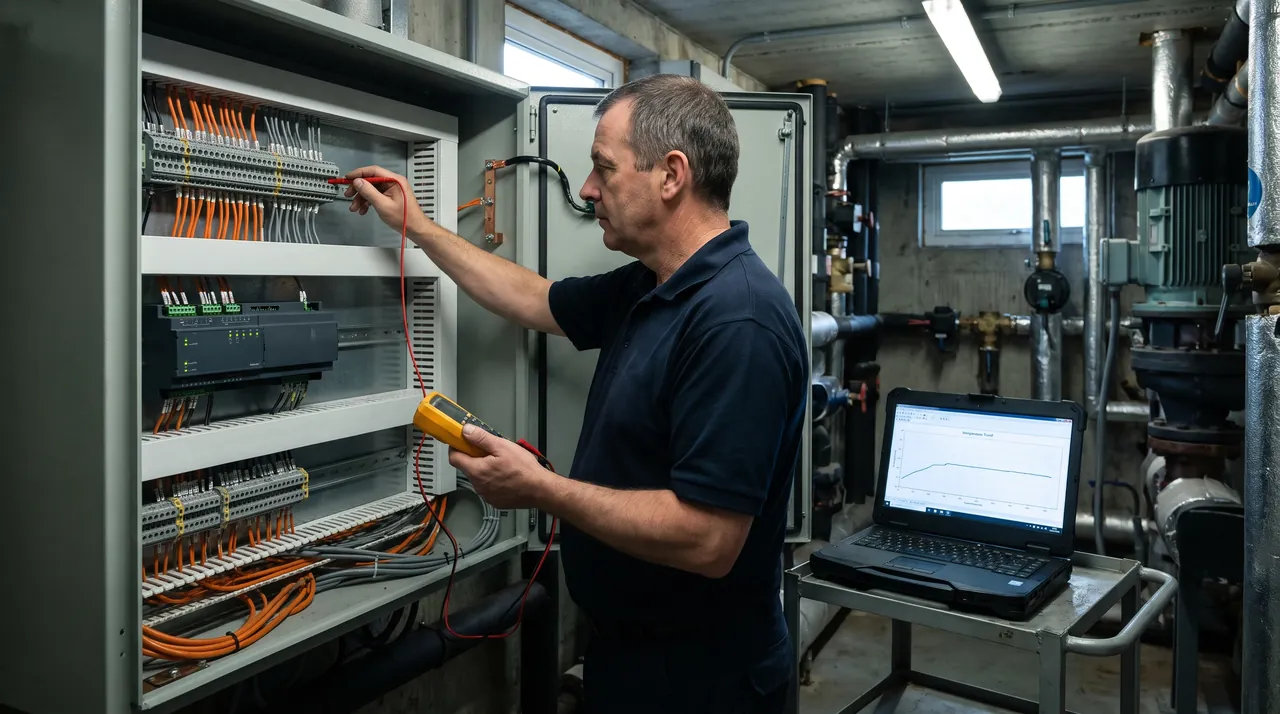
Fault finding and repairs
Tripping circuits, loss of power to a floor, a shop or a landlord supply, lighting failures and intermittent faults, tested circuit by circuit and repaired at the cause.
Consumer unit and distribution board upgrades
Old or damaged consumer units and distribution boards replaced, with the circuits tested and labelled and the results recorded.
Rewiring
Full or partial rewiring when an installation is past its working life, when a unit is refitted, or when the EICR shows wiring that has to be replaced.
Commercial EICR and remedial work
Electrical Installation Condition Reports for commercial premises and the shared parts of blocks, with every C1 and C2 explained and remedial work quoted before it starts.
EICR in LondonPAT testing
Portable appliance testing scheduled to the risk of each area, from kitchens and workshops to quiet offices, with the results kept for your records.
PAT testingPlanned electrical maintenance
Electrical checks on an agreed schedule, a running list of faults and remedials, and EICR and PAT dates kept in one renewal tracker.
Planned maintenance contracts24/7 emergency call-out
Our emergency line is answered day and night, weekends included. We aim to attend the same day across London.
24/7 emergency lineInspection and testing
Commercial EICR in London
An Electrical Installation Condition Report, or EICR, is a full inspection and test of a building's fixed wiring: the distribution boards, circuits, sockets, lighting and earthing. It tells you whether the installation is safe to keep using, what needs fixing and how urgently.
For a business, it is the clearest way to show you are looking after your electrics. HSE says the best way to find out if an electrical installation is safe is to have it inspected and tested by a person who has the competence to do so, and that installations should be tested often enough that there is little chance of deterioration leading to danger (HSE electrical safety FAQs). For work on installations below 1000 volts AC, HSE points to the guidelines in BS 7671, the IET Wiring Regulations (HSE).
Our commercial EICRs are carried out by NICEIC certified electricians. We recommend the date of the next inspection in each report, based on how the building is used and the condition we find, and keep that date in your renewal tracker so it is booked before it falls due. In residential blocks we cover the landlord and communal supplies; the flats themselves follow the rules for rented homes on our EICR for landlords page.
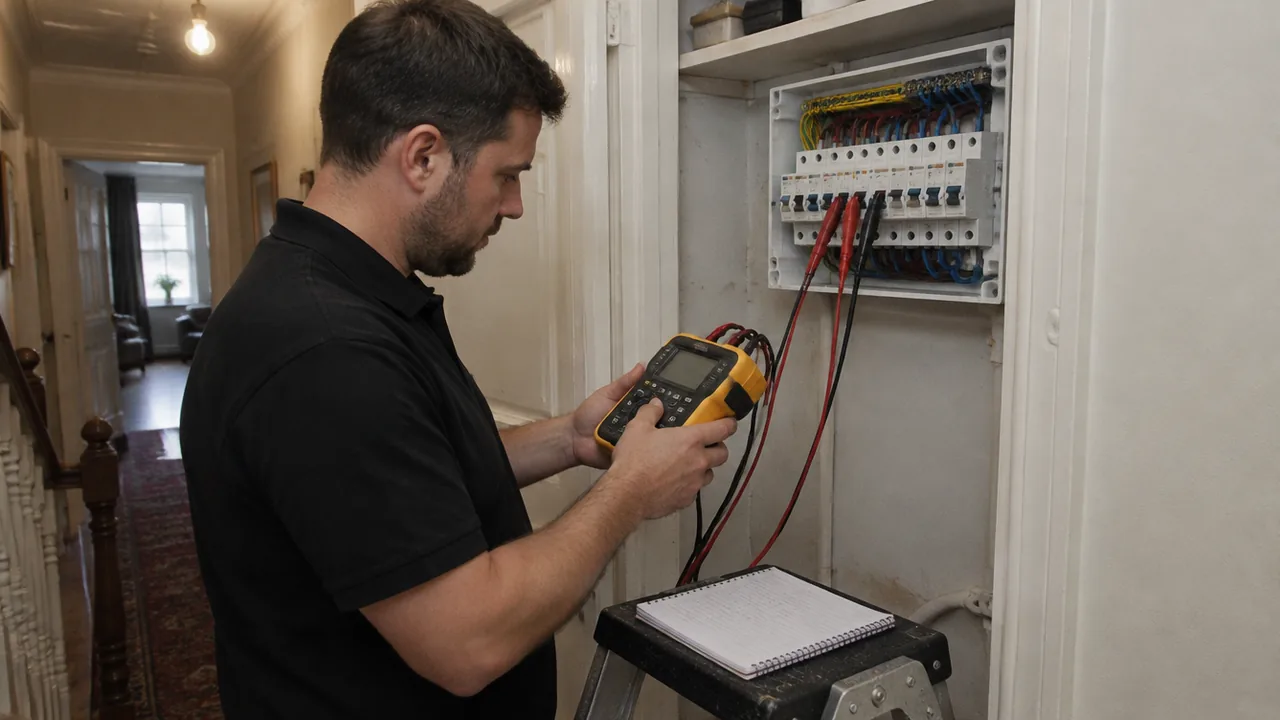
How a Commercial EICR Visit Works
The same five steps whether it is a single shop or a ten-storey office. Planning comes first, because some tests mean switching circuits off.
- STEP 1
Plan the visit
Some tests need circuits switched off, so we agree the timing, the areas and any sensitive equipment with you before we arrive.
- STEP 2
Inspect
Distribution boards, consumer units, accessories, cables and earthing are looked at for damage, wear, overheating and signs of unsafe alterations.
- STEP 3
Test
Circuits are tested one by one and the readings recorded, so the condition of the installation is measured, not guessed.
- STEP 4
Code what is found
Each observation is given a code (C1, C2, C3 or FI) so you can see at a glance what is dangerous and what is advice.
- STEP 5
Report and fixed price
The report comes with photos and a plain-English summary, and any remedial work is priced before anything is done.
If the electrician finds something dangerous, they can make it safe before leaving, and you get a fixed price for the rest of the remedial work.
What the EICR Codes Mean: C1, C2, C3 and FI
Every observation on an EICR gets a code. The wording below is from the government's guidance on electrical safety standards (GOV.UK), which uses the same codes as every EICR.
Danger present
There is a risk of injury now. The official wording is "Danger present. Risk of injury." The electrician can make a C1 hazard safe before leaving.
Potentially dangerous
Not dangerous this minute, but it could become dangerous. C1 and C2 both mean remedial work is needed.
Improvement recommended
Advice only. A C3 on its own does not make the report unsatisfactory, and the work is your choice.
Further investigation
Something could not be fully checked on the day, such as a circuit that could not be traced or reached, and needs a closer look.
A recent change to FI. The IET explains that in the latest amendment to the Wiring Regulations, BS 7671:2018+A4:2026, the FI wording changed from further investigation being required without delay to further investigation being advised, and that C3 and FI no longer make the outcome unsatisfactory on their own (IET Wiring Matters, July 2026). Either way, we tell you what an FI is about, whether we think it matters, and what it would cost to investigate.
Planned work
Commercial Electrical Maintenance
Planned electrical maintenance means the electrics in your building are checked on a schedule, small faults are fixed while they are still small, and the EICR and PAT dates never sneak up on you. It causes far less disruption than waiting for a breakdown on a Friday afternoon.
There is a legal reason too. The Electricity at Work Regulations 1989 put duties on employers and self-employed people for the matters within their control (regulation 3), and require that, where it is needed to prevent danger, electrical systems are maintained so as to prevent danger, so far as is reasonably practicable (regulation 4).
A maintenance contract with us gives you a written record of how that is being done: what was checked, when, by whom and what was put right. That record is useful for your insurer, your landlord, your tenants and anyone who asks.
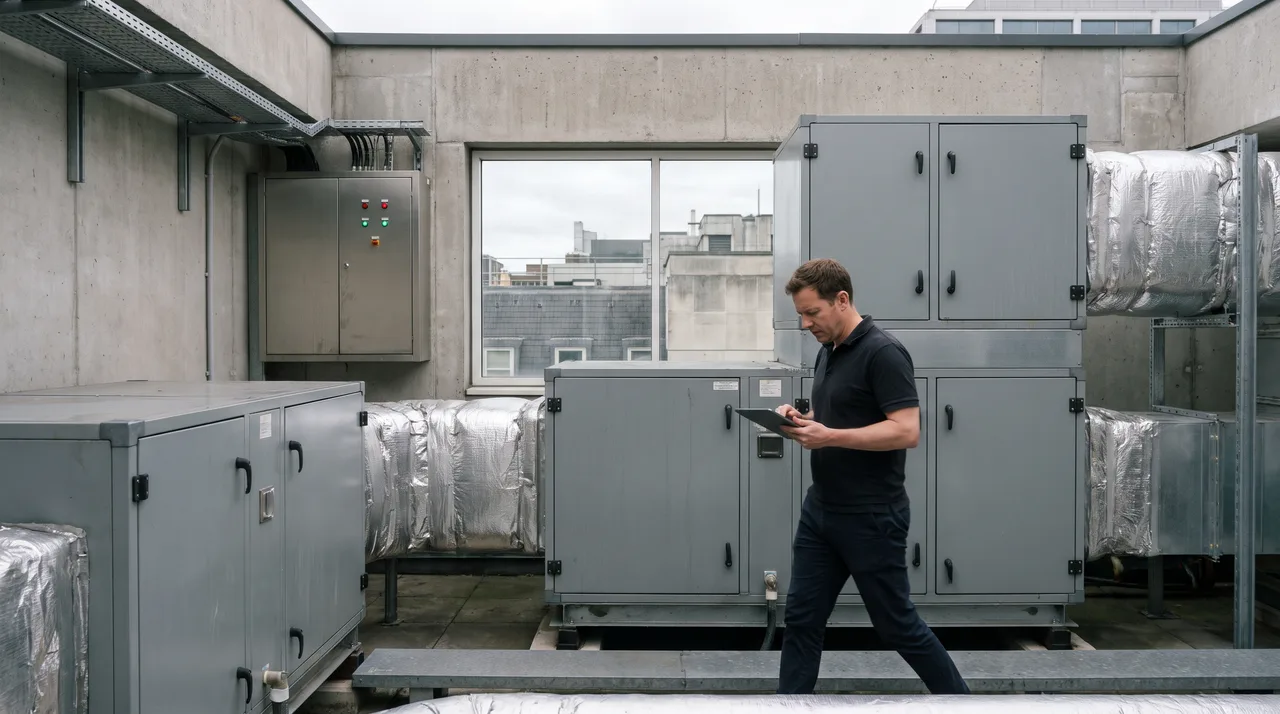
An agreed schedule
Visits planned around how the building is used: a quiet office, a busy kitchen and a block's communal areas do not need the same thing.
Lighting and small power
Failed lamps and fittings, damaged sockets and accessories, and lighting circuits in stairwells, corridors and car parks put right.
Boards and supplies
Distribution boards, consumer units and landlord supplies looked at for damage, overheating and signs of trouble before they trip.
One list of remedials
Every fault and EICR observation on one list with its status, so you always know what is open, what is quoted and what is fixed.
EICR and PAT dates tracked
Renewal dates for each building kept in one tracker and booked before they fall due.
A report every visit
What was checked, what was found, what was fixed and what needs a price, with photos, sent by email.
PAT Testing: Based on Risk, Not a Fixed Date
HSE says the law does not make inspection or testing of electrical appliances a legal requirement, and does not require it to be done every year. What the law does require is that electrical equipment is maintained to prevent danger. HSE says how often equipment is inspected and tested depends on the type of equipment and the environment it is used in, and advises a risk-based approach (HSE PAT testing FAQs).
HSE also says that for most portable equipment in a low-risk workplace, a portable appliance test is not needed, and that low-cost user checks and visual inspections are a good way to maintain it (HSE). So a restaurant kitchen and a quiet office should not be on the same programme. We set the testing for each area to its risk, and record the results for your files.
PAT testing in LondonCommercial Electrical Safety: What the Rules Say
From the regulations and HSE's own guidance, in plain English.
Maintained to prevent danger
Where it is needed to prevent danger, electrical systems must be maintained so as to prevent danger, so far as is reasonably practicable (Electricity at Work Regulations 1989, regulation 4).
Tested often enough
Installations should be tested often enough that there is little chance of deterioration leading to danger, by a person with the competence to do it (HSE).
Defects switched off
Any part of an installation that has become obviously defective between tests should be de-energised until the fault can be fixed (HSE).
One contractor
One Contractor for Electrical, HVAC, BMS and Plumbing
In a commercial building the trades overlap all the time. An air conditioning unit that will not start may be a tripped supply. A BMS alarm may be a failed power supply in a control panel. A leak near a distribution board is a plumbing job and an electrical job at once.
With one contractor, there is no argument about whose problem it is. You call one number, one engineer looks at the whole picture, and the work goes to the person qualified to do it. The building gets one planned programme, one list of remedials and one report format.
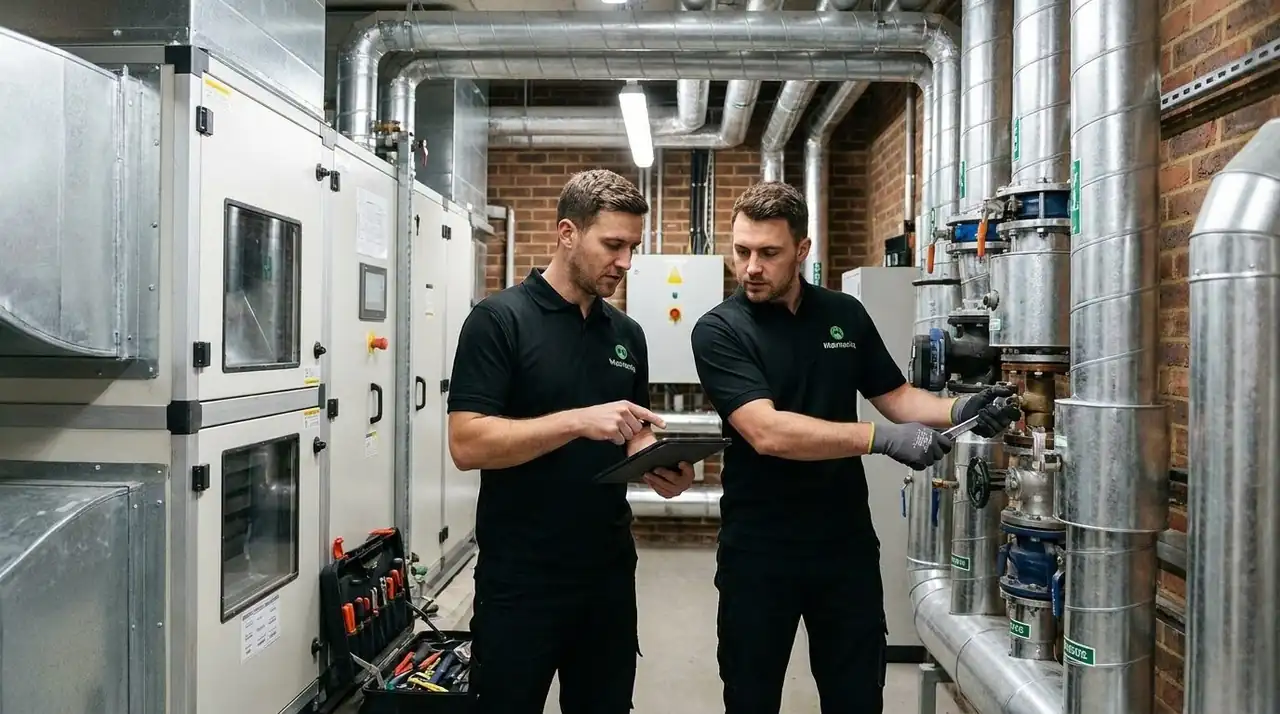
Electrical
Repairs, upgrades, EICR, PAT testing and planned electrical maintenance.
Plumber and electricianHVAC
Air conditioning, heating, ventilation and fan coil units, serviced and repaired.
HVAC maintenanceBMS
Building management systems kept running, with faults on controls and panels traced.
Building management systemsPlumbing
Leak detection, pipe repairs and drain unblocking in commercial buildings.
Commercial plumberWhy it matters for facilities managers
- One contract and one point of contact for the building's services
- Faults that cross trades are traced once, not passed between firms
- EICR, PAT, F-Gas and service dates in one renewal tracker
- A report with photos for every visit, in the same format for every trade
24/7 Emergency Commercial Electrician
When the power goes in a commercial building, people stop working, tills stop taking money and kitchens stop cooking. Our emergency line is answered 24/7, nights and weekends included, and in London we aim to attend the same day. We always aim to fix the fault on the first visit; if a part has to be ordered, the installation is made safe and you get a fixed price first.
Loss of power
A floor, a shop, a kitchen or a landlord supply with no power.
Circuits that keep tripping
A breaker or RCD that will not stay on, often taking tills, lights or equipment with it.
Lighting failures
Stairwells, corridors, car parks or a shop floor in the dark.
Damaged or hot equipment
Burning smells, scorch marks, damaged boards or water near electrics.
While you wait: keep people away from damaged equipment, boards or cables, and do not reset a breaker that keeps tripping. HSE says any part of an installation that has become obviously defective should be de-energised until the fault can be fixed (HSE). If anyone is in danger, call 999.
Air conditioning or heating down at the same time? Our 24/7 emergency line covers HVAC and building services too.
How Working With Us Works
- 1
Tell us about the building
Call or WhatsApp us with the type of building, what is going wrong and when the last EICR was done. A copy of the last report helps.
- 2
Free site survey
An engineer looks at the boards, the supplies and the problem areas. Free in London; outside London, free for larger jobs, otherwise we quote the visit first.
- 3
Fixed price or contract
A fixed price for the repair, the EICR or the remedial work, or one contract for planned and reactive work. Nothing is done until you agree it.
- 4
Work, report, tracker
The work is done by NICEIC certified electricians, every visit ends with a report with photos, and renewal dates go in your tracker.
A photographed PDF report after every commercial electrical visit
No handwritten job sheets and no chasing. Our engineers complete each job electronically on site in Maintivo, our job management system, so the report is built as the work happens: photos, readings, work done and recommendations.
You receive it as a digital PDF by email the same day, with certificates attached where they apply, ready to forward to a landlord, a freeholder, the directors or an insurer.
- Before and after photosEvery unit and fault photographed on site
- Readings and checksTemperatures, pressures and test results recorded
- Work done and next stepsWhat was fixed, what needs quoting, when we return
- Sent the same dayDigital PDF report by email, ready to forward
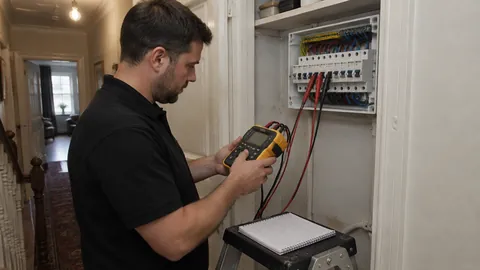
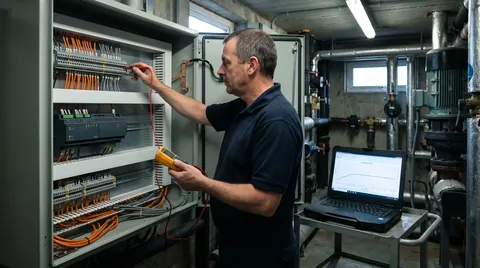

Example layout. Completed on site in Maintivo.
Qualifications Behind the Work
Mainteniq coordinates every job, and electrical work is carried out by NICEIC certified electricians. You can find out more about NICEIC certification on the NICEIC website.
What customers say on Google
“I've had the pleasure of working with Petru and his team on a number of maintenance jobs, and they've always been fantastic. They're professional, reliable, and complete every job to a really high standard. Petru is incredibly knowledgeable and it's clear he takes pride in his work.”
Deborah L.
Google review
“Excellent service. Price assessment: reasonable price.”
Attila B.
Google review
“The team is knowledgeable, efficient, and attentive to detail. A great choice for anyone looking for reliable maintenance services. Highly recommended!”
Ben
Google review
Book a Free Commercial Electrical Site Survey
In London an engineer comes to look at your building for free; outside London it is free for larger jobs, and for smaller ones we quote the visit first. You get a report with photos and a fixed price before any work, with guarantee terms set out in your quote.