How Is a Fan Coil Unit Serviced? A Step-by-Step Checklist
A fan coil service is more than a new filter. This is the checklist our engineers follow on every unit, how often each job is due in flats, offices and hotels, and what you should expect to see in the report afterwards.
Direct answer: a fan coil unit service covers ten checks: isolate the unit, change the filter, clean the coil, clean and check the fan, clean and disinfect the drip tray, clear and water-test the condensate drain, test the valves and actuators, check the controls and BMS signal, run the unit in heating and cooling, and record the results with photos. Flats need it at least once a year; offices and hotels two to four times a year.
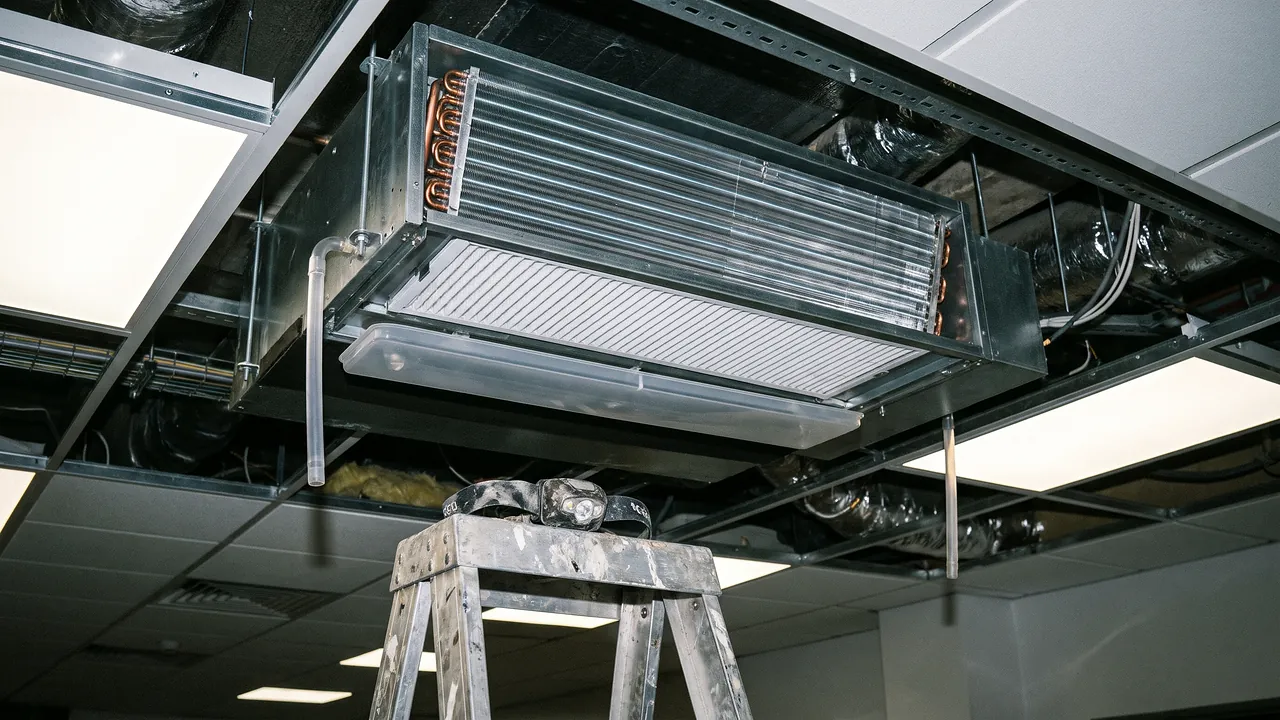
The fan coil service checklist, step by step
- Isolate the unit. Switch off at the controller and the fused spur, and check it is dead before the panel comes off.
- Change or clean the filter. Note how dirty it was: a filter packed with dust tells you the interval is too long.
- Clean the coil. Brush and vacuum the fins, then use a non-acid coil cleaner. Straighten flattened fins so air can pass.
- Clean and check the fan. Clear dust from the blower wheels, check they spin freely and quietly, and listen for worn bearings.
- Clean the drip tray. Remove slime and debris, disinfect it, and check for rust or cracks.
- Clear and test the drain. Flush the condensate pipe and pour water into the tray to prove it drains away. Test the condensate pump if there is one.
- Test valves and actuators. Drive each valve fully open and shut, and check the coil warms or cools as it should. On 4-pipe units, check the two valves never open together.
- Check the controls. Controller settings, room sensor, fan speeds and, where there is one, the signal from the building management system.
- Run and measure. Run the unit in heating and cooling, and record air temperatures in and out and the water temperatures reaching the unit.
- Photograph and report. Before and after photos, readings, faults found and recommended parts, in priority order.
How often is each job due?
| Building | Full service | Filters checked |
|---|---|---|
| Flats and build-to-rent | At least once a year, ideally before summer | At the service, or every six months in dusty homes |
| Offices | Two to four visits a year | Every visit; monthly in busy or dusty areas |
| Hotels | Rooms in rotation, usually each quarter | Every visit, and after any room refurbishment |
| Shops, restaurants, gyms | Two to four visits a year | Every one to three months |
| During or after building works | Before handover and after works finish | Weekly while dust is in the air |
CIBSE TM43 is the UK guidance on fan coil units, and SFG20 is the maintenance specification most contracts are written to. The right interval for your building depends on how it is used, so a good contractor adjusts it from what they find on the first visits.
What gets recorded for each unit
At Mainteniq every unit is logged on site in Maintivo, our job management system, and the report is sent the same day. On a block, the managing agent also gets a summary across every flat. See an example on our digital maintenance reports page.
Signs a fan coil unit is overdue for a service
Our guide to fan coil unit problems explains what each symptom means.
Servicing a whole block or office floor
Fan coil servicing is cheapest and least disruptive when a whole floor or block is done together. Access is agreed once with the concierge or building team, residents get notice, flats nobody answers are logged and rebooked, and each unit is priced as part of a block rate. The fan coils can sit on the same block maintenance contract as the HIUs, MVHR and communal plant, so one visit covers everything in the flat.
Book a fan coil service
Mainteniq services fan coil units in London flats, build-to-rent blocks, hotels and offices, priced per unit with lower rates for whole floors and blocks. Every unit gets a photographed report, and contract clients have our 24/7 emergency line. See our FCU maintenance page, or if your units are worn out rather than dirty, fan coil unit refurbishment.
Sources
- CIBSE TM43: Fan coil units (cibse.org)
- BESA, SFG20 maintenance specification (sfg20.co.uk)
Related services & guides
Talk to a London maintenance specialist
Whether it's one property or a portfolio, we'll put your compliance and servicing on a single planned maintenance contract. Get a no-obligation quote.