Fan Coil Unit Problems: Leaking, Noisy, Not Heating or Cooling
Water dripping from the ceiling grille, a fan that rattles all night, warm air on a hot day: fan coil faults are some of the most common calls we get from London flats and offices. Here is what each symptom usually means, what you can safely check, and how it is fixed.
Direct answer: most fan coil unit problems come from four parts: a blocked condensate drain (leaks), a clogged filter or dirty coil (weak air, smells, noise), a stuck valve or failed actuator (no heating or no cooling) and a controller or BMS fault (unit will not respond). Leaks need attention the same day; the rest can usually wait for a booked visit.
Fan coil symptoms and their usual causes
| What you notice | Most likely cause | Usual fix |
|---|---|---|
| Water dripping from the grille or ceiling | Blocked drip tray or condensate drain | Clear and flush the drain, clean the tray, test with water |
| Wet patch even when heating | Leaking valve, hose or coil | Isolate, replace the hose or valve, or repair or replace the coil |
| Rattling, humming or whining | Dusty or unbalanced fan wheel, worn bearings, loose panel | Clean the fan deck, tighten panels, replace the motor or fan deck |
| Weak airflow | Clogged filter or coil, failing fan | New filter, coil clean, fan speed and motor check |
| Warm air when set to cooling | Building still in heating mode (2-pipe), stuck chilled water valve, failed actuator | Check changeover; test or replace the valve or actuator |
| No heat in winter | Stuck heating valve, actuator, controller, or low water temperature from the plant or HIU | Test valve and controls; check the supply temperature |
| Musty or damp smell | Stagnant water in the tray, mould on a damp coil | Clean and disinfect the tray and coil, clear the drain, new filter |
| Controller blank or showing an error | No power at the fused spur, failed controller, lost BMS signal | Check power, then the controller and network connection |
| One room hot, another cold | Ducts or dampers out of balance, blocked grille | Rebalance airflow, clear grilles, check duct connections |
Fan coil unit leaking: the most common call
When a fan coil cools, it pulls moisture out of the room air. That water condenses on the cold fins, runs into a shallow drip tray and away down a small condensate pipe, sometimes with a little pump. Over months the tray collects dust, slime and debris, the pipe narrows, and one warm, humid day the tray overflows through the casing and the ceiling below.
A leak that only happens when cooling is almost always the drain. A leak that happens in winter too, when there is no condensation, points to the water side: a weeping valve, a perished flexible hose or a corroded coil.
From our jobs
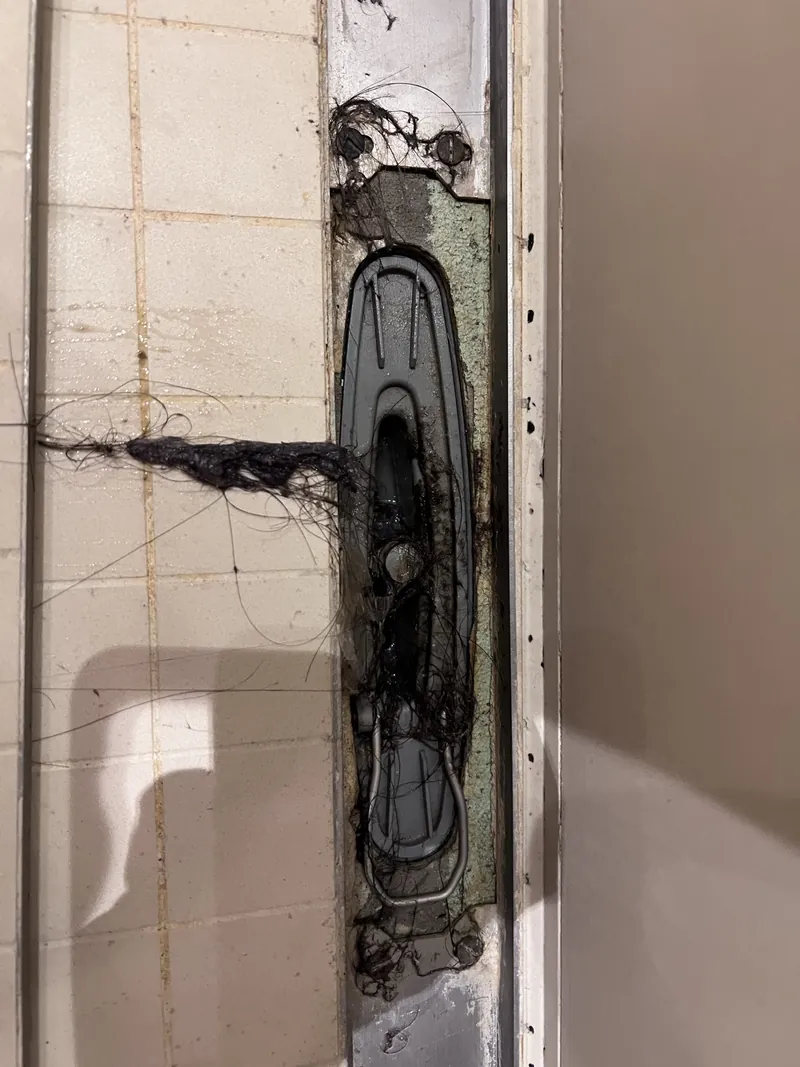
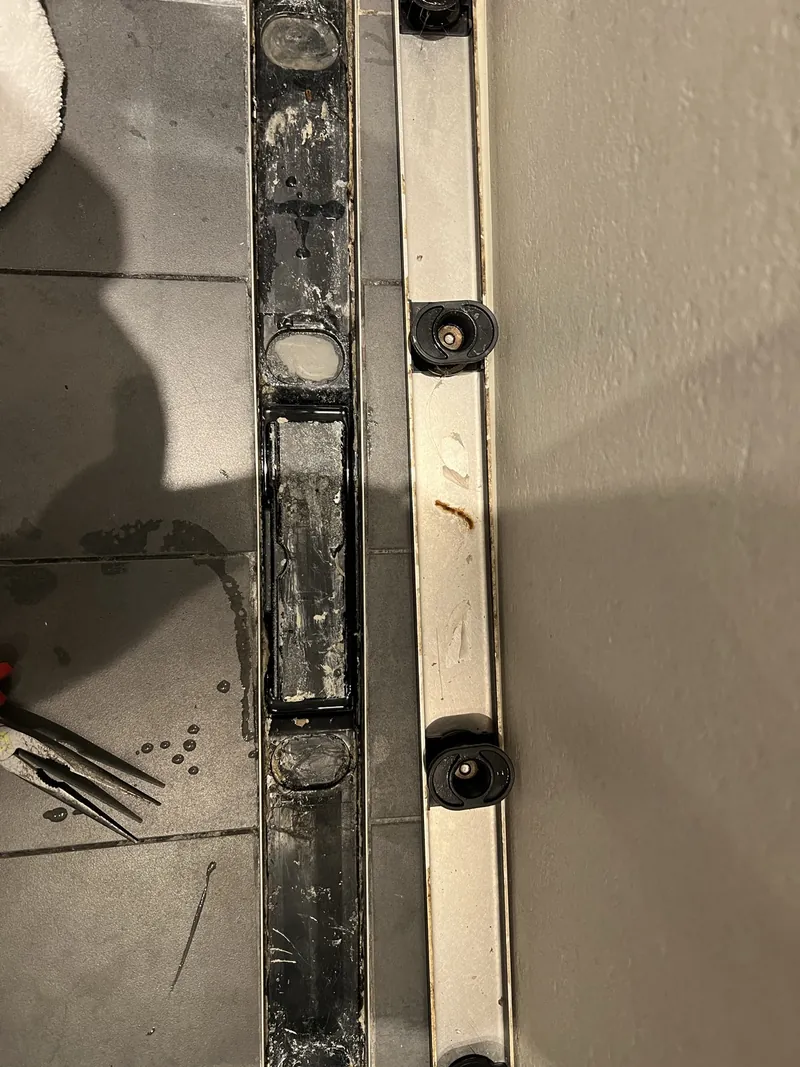
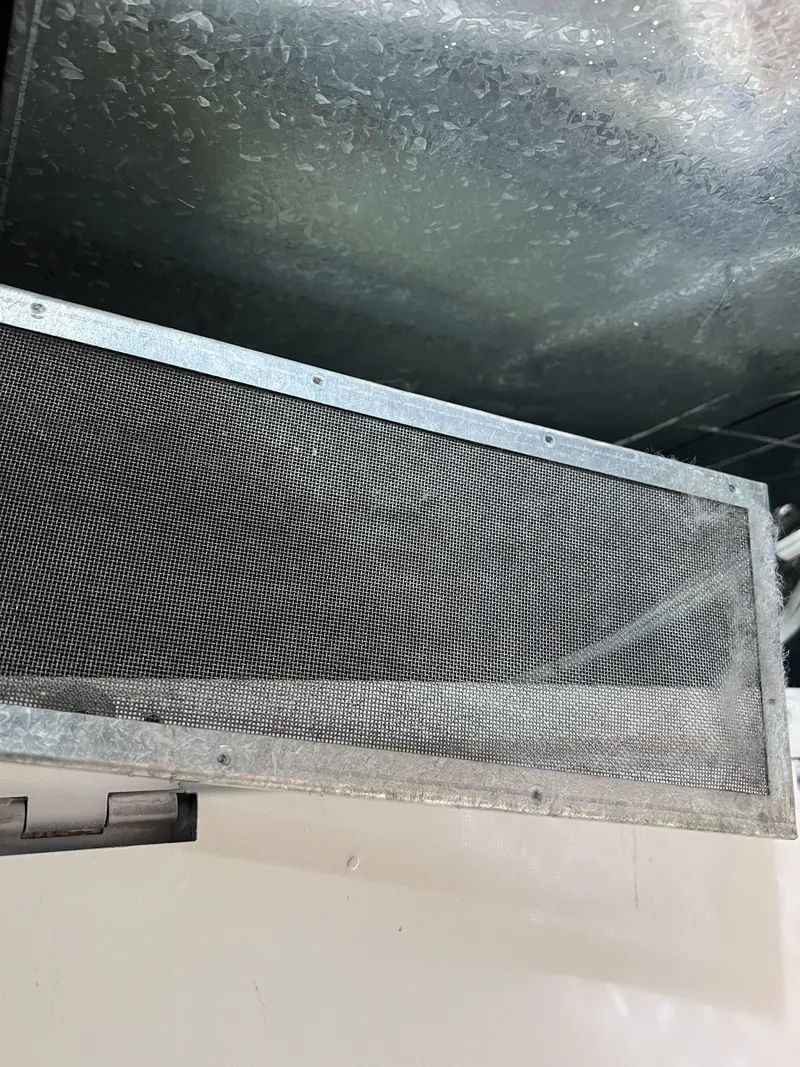
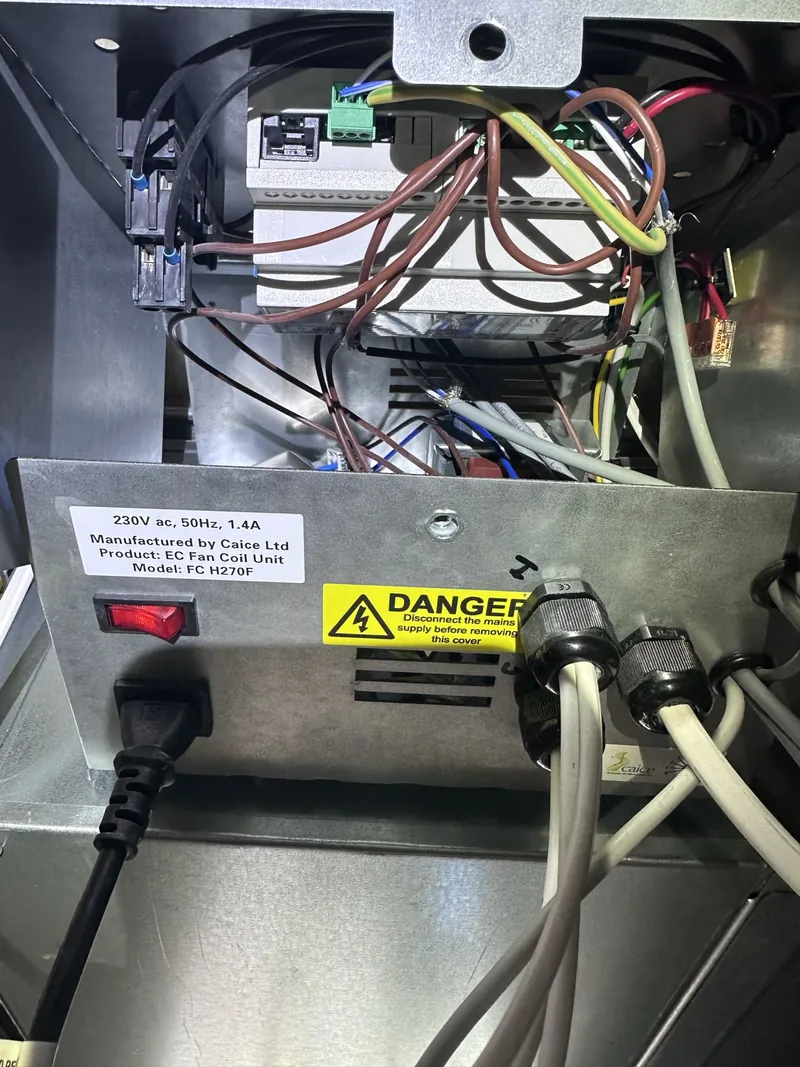
What we find inside leaking and tired fan coils
Real photos from London flats we service.
Noisy fan coil unit
Fan coil not cooling or not heating
Before calling anyone, check two things. Is the controller in the right mode and set well below or above the room temperature? And is your building 2-pipe? On a 2-pipe system the whole building switches between heating and cooling by season, so asking for cooling in April or heating in October may do nothing until the changeover. Our guide to 2-pipe vs 4-pipe fan coil units explains how to tell.
If the mode is right and the building is supplying, the engineer looks at the water side and the controls together: is hot or chilled water reaching the unit, does the valve open when asked, is the actuator moving, and is the controller or BMS actually sending the signal? In flats with a heat interface unit or cooling interface unit, those are checked too, because the fault is often upstream of the fan coil.
What you can safely check yourself
Who to call in a block of flats
Tenants should report fan coil faults to their landlord or letting agent first. Leaseholders should check their lease: the unit in the flat is often the flat owner's, while the pipes, risers and plant room are the building's, looked after by the managing agent. If several flats lose heating or cooling at once, the cause is almost certainly in the shared plant, so tell the managing agent straight away.
How to stop it happening again
Nearly every problem above is cheaper to prevent than to fix. A planned service clears the drain and tray, changes the filter, cleans the coil and fan, and tests the valves and controls before the hot or cold weather arrives. See how a fan coil unit is serviced. Units that keep failing despite servicing are often worth refurbishing.
Fan coil repairs in London
Mainteniq repairs fan coil units in London flats, build-to-rent blocks, hotels and offices. Our line is answered 24/7, nights and weekends included, with same-day response across London for urgent faults such as leaks, and attendance usually within a day in the Home Counties. The engineer diagnoses the fault first, and you get a price before any further work. Every visit ends with a photographed report you can forward to a landlord or managing agent.
See our FCU repair and maintenance page, or for an urgent fault, our emergency HVAC repair line.
Related services & guides
Talk to a London maintenance specialist
Whether it's one property or a portfolio, we'll put your compliance and servicing on a single planned maintenance contract. Get a no-obligation quote.